Transferability & Owner Dependency
Beyond the Transaction: The Strategic Role of a Real Estate Consultant in Your Legacy
A property is never just a collection of bricks and mortar; it's either the foundation of your future or the silent anchor dragging down your enterprise value. For many owners, real estate remains a disconnected liability, often opaque and unrefined. Engaging a strategic real estate consultant is not a mere transaction; it's a meticulous act of preservation. The 2023 Exit Planning Institute survey found that 78% of business owners lack a formal transition plan, leaving their most significant assets to chance. We believe every square foot must be refined with the same uncompromising precision as a master-crafted engine.
You've likely felt the weight of advice that prioritizes commissions over your enduring heritage. It's a common pain when property strategy fails to harmonize with your ultimate vision for a graceful exit. This article demonstrates how a strategic partnership transforms your holdings from static burdens into powerful levers for enterprise value. We'll examine how to secure a transferable asset by aligning your property with a bespoke Value Growth Roadmap.
Key Takeaways
- Shift your perspective from viewing property as a static structure to a dynamic instrument of enterprise value and long-term legacy preservation.
- Uncover the hidden architecture of lease structures and how these bespoke arrangements directly influence your business’s EBITDA and final valuation.
- Understand why a strategic real estate consultant offers the meticulous, fee-based counsel necessary to align your physical assets with a ten-year strategic horizon.
- Adopt a buyer’s perspective to refine your property’s "curb appeal," ensuring every square foot contributes to a state of uncompromising exit readiness.
- Explore how a "Value Growth Roadmap" harmonizes your real estate decisions with a curated team of advisors to protect and evolve your professional heritage.
Defining the Role: Why Business Owners Need a Strategic Real Estate Consultant
A real estate consultant is a fiduciary-minded advisor for enterprise-level decisions. They operate with a reverence for the long-term, providing objective, fee-based counsel that transcends the limitations of transaction-focused brokerage. For the business owner, real estate isn't a mere line item on a balance sheet; it's the physical manifestation of their legacy. This role focuses on aligning physical assets with the eventual transfer of the company, ensuring that the transition is seamless and the value is maximized. It's about stewardship, not just sales. By acting as an uncompromising advocate, the real estate consultant ensures that the owner’s vision remains the primary driver of every decision.
The Shift from Transactional to Strategic
The common buy/sell mentality frequently ignores the broader Value Gap. This gap represents the discrepancy between an asset's current performance and its peak potential, often resulting in a loss of 15% to 20% of equity during a business sale. A strategic consultant replaces speculation with objective research to determine the Highest and Best Use of a property. They evaluate market trends with surgical precision to protect the integrity of the owner's legacy. This approach ensures that every decision serves the portfolio’s optimization and mitigates risks that might otherwise remain hidden until the 11th hour of a deal.
Who Benefits Most from Consulting?
The need for this specialized stewardship is most acute for those managing complex transitions where the stakes extend beyond the immediate horizon. Certain profiles find the most value in this meticulous level of detail:
- Owners of OOCRE: Those with owner-occupied commercial real estate must balance operational needs with the asset’s independent investment value.
- Family Businesses: Navigating multi-generational asset transfers requires a delicate blend of emotional intelligence and technical expertise to ensure the soul of the business survives the handover.
- Exit-Ready Companies: Firms preparing for an Exit Readiness Assessment within 24-36 months need to ensure their real estate assets are positioned as a value-add rather than a liability to potential buyers.
True craftsmanship in real estate advisory isn't about chasing the next commission. It's about the next generation. By focusing on market feasibility and long-term outcomes, the consultant ensures the physical foundation of the business is as resilient and enduring as the brand itself. For those who have dedicated their lives to service, such as military or first responders, this same level of care is available through the Lead the Way Home Savings Program, which specializes in residential services for community heroes. This creates a narrative of excellence that spans decades, turning property—both commercial and personal—into a cornerstone of a lasting heritage.
The Hidden Architecture: How Real Estate Shapes Your Enterprise Value
Real estate often represents 30% to 40% of a business owner’s total net worth, yet it remains the least refined component of the corporate engine. While owners spend decades perfecting their internal processes, the physical foundation of the enterprise is frequently left to chance. This silent architecture carries the power to either amplify your legacy or anchor it to the ground. A sophisticated real estate consultant views these assets through the lens of a master restorer, identifying where the structure supports the mission and where it creates drag. Without meticulous optimization, the very walls that housed your success can become the primary obstacle to your transition.
Lease Logic and Valuation
The "sweetheart" lease is a common artifact in family-owned enterprises. Owners often charge their operating companies below-market rent to manage cash flow or tax liabilities. During the cold precision of due diligence, a buyer will normalize these expenses to market rates. This adjustment instantly shrinks the Earnings Before Interest, Taxes, Depreciation, and Amortization (EBITDA). If a lease is $5,000 below market monthly, that $60,000 annual gap can erase $300,000 in enterprise value at a 5x multiple. Ensuring lease terms are bespoke, market-aligned, and attractive to third-party buyers is not just a clerical task; it's a preservation of wealth. The goal is a seamless "Transferable Asset" where the business and the property can exist in a state of productive harmony, regardless of who holds the keys.
Just as a rare engine requires a master’s touch to achieve peak performance, your property portfolio demands a stewardship approach that honors the past while securing the future.
Environmental and Structural Liabilities
Red flags in property are the silent deal killers of the modern era. According to the 2023 Exit Planning Institute State of Owner Readiness Report, nearly 50% of owners have not addressed potential "Value Gaps" in their physical assets. These gaps often manifest as deferred maintenance or environmental shadows. Proactive steps include:
- Phase I Environmental Site Assessments: Conducting these under ASTM E1527-21 standards early prevents last-minute surprises that can derail a sale.
- Structural Integrity Audits: Roofs, HVAC systems, and foundations should be viewed as mechanical components requiring uncompromising maintenance schedules.
- Zoning and Compliance: Ensuring the property’s legal evolution has kept pace with its physical growth.
A real estate consultant identifies these liabilities long before a buyer’s inspector arrives. This foresight transforms a potential "Value Gap" multiplier into a narrative of excellence. When the property is as meticulously curated as the business itself, the transition becomes an evolution of heritage rather than a desperate liquidation of parts.
This meticulous curation is especially important for businesses with complex operational needs, such as those providing mobile wound care glendale ca, where the physical assets must seamlessly support a specialized clinical mission while maintaining the overall value of the estate.
Strategic Counsel vs. Transactional Brokerage: Choosing the Right Path
The distinction between a transactional broker and a real estate consultant defines the trajectory of an entire estate. Brokerage is a function of velocity, prioritizing the immediate closing to trigger a commission. Strategy, however, requires a deliberate slowing of pace. While a broker seeks the exit, a consultant seeks the evolution of the asset. This difference is most visible in the 10-year horizon; a consultant views properties as interconnected threads in a larger tapestry, ensuring each move strengthens the collective whole.
A consultant acts as a Master Craftsman for your portfolio. They polish the technical details that others overlook, from subtle zoning shifts to long-term tax implications. The best exit plans often utilize both roles, but the consultant must lead the strategy. Without this guidance, the broker is a navigator without a map, moving quickly but potentially in the wrong direction. Precision is paramount. Every decision must be weighed against its impact on the soul of the legacy being built.
Incentive Alignment
Commission-only advice carries an inherent conflict of interest. When compensation depends entirely on a transaction, the advice naturally leans toward movement. A real estate consultant, paid through flat fees or retainers, offers the luxury of the unvarnished truth. They possess the freedom to recommend a "hold" or a "do nothing" strategy if the data suggests the market is not yet ripe. This alignment ensures that every recommendation is driven by the client's legacy rather than the professional's bottom line. In a 2023 industry survey, high-net-worth investors cited conflict of interest as the primary reason for seeking independent counsel over traditional brokerage services.
The Depth of Analysis
Brokers focus on the mechanics of the deal. They analyze local comps and current interest rates to facilitate a sale. Consultants apply enterprise diagnostics to achieve portfolio harmony. They see beyond the local market, evaluating how a single property affects the liquidity and risk profile of an entire global collection. At 41 Legacy, we apply a reverence for craftsmanship to property evaluation, treating each asset with the same meticulous care an artisan gives to a rare engine. This depth of analysis ensures that the portfolio remains a cohesive expression of the owner's vision, rather than a fragmented list of holdings. True excellence is found in the details that others ignore. We believe that an uncompromising approach to data is the only way to preserve heritage.
Assessing Your Asset: A Framework for Real Estate Exit Readiness
Exit Readiness is the state of being permanently prepared for a transition. It's a philosophy of stewardship that ensures a property is always positioned for its next chapter, regardless of when that chapter begins. For the discerning owner, this means viewing the asset through the cold, analytical lens of a sophisticated buyer while maintaining the reverence of a curator. A real estate consultant acts as the master technician in this process, identifying the subtle friction points that diminish value before they become structural failures in a deal.
Preparation begins with the "Curb Appeal" of the operation, not just the facade of the building. While fresh paint matters, a buyer is more interested in the elegance of the underlying infrastructure. This includes a meticulous review of zoning designations, historical easements, and title encumbrances. Data from the American Land Title Association suggests that 25% of all real estate transactions encounter title issues that require resolution. For enterprises managing significant property debt or complex portfolios, mortgage back office outsourcing provides the specialized support needed to resolve title and settlement issues long before a planned exit, ensuring the legacy remains untarnished by avoidable legal entanglements.
The 41 Legacy Property Diagnostic
We evaluate the harmony between physical space and operational soul. This diagnostic identifies "Non-Core" assets, such as underutilized parcels or secondary structures, that clutter the balance sheet. Liquidating these components early simplifies the exit and sharpens the focus on the primary legacy. By optimizing the balance sheet for maximum market attractiveness, we ensure the property reflects the uncompromising standards of its owner. Every square foot must justify its existence within the broader vision of the estate.
Preparing for Due Diligence
The "Digital Vault" is the modern equivalent of a perfectly preserved service manual. It contains every lease, permit, and maintenance record, organized with surgical precision. Transitioning to this level of readiness requires robust Standard Operating Procedures (SOPs) for property management. These protocols reduce owner-dependency, proving to a successor that the asset can thrive independently. When the real estate consultant verifies that 100% of environmental reports and mechanical audits are current, the property moves from being a personal project to a turnkey legacy. This meticulous documentation transforms a complex transaction into a seamless evolution. For those establishing or relocating operations to coastal regions, you can visit Steve Adams & Associates for practical guidance on managing local utilities and permits.
Ensure your property is prepared for its next evolution by partnering with the experts at 41 Legacy.
The 41 Legacy Quarterback: Coordinating Your Real Estate with Your Value Growth Roadmap
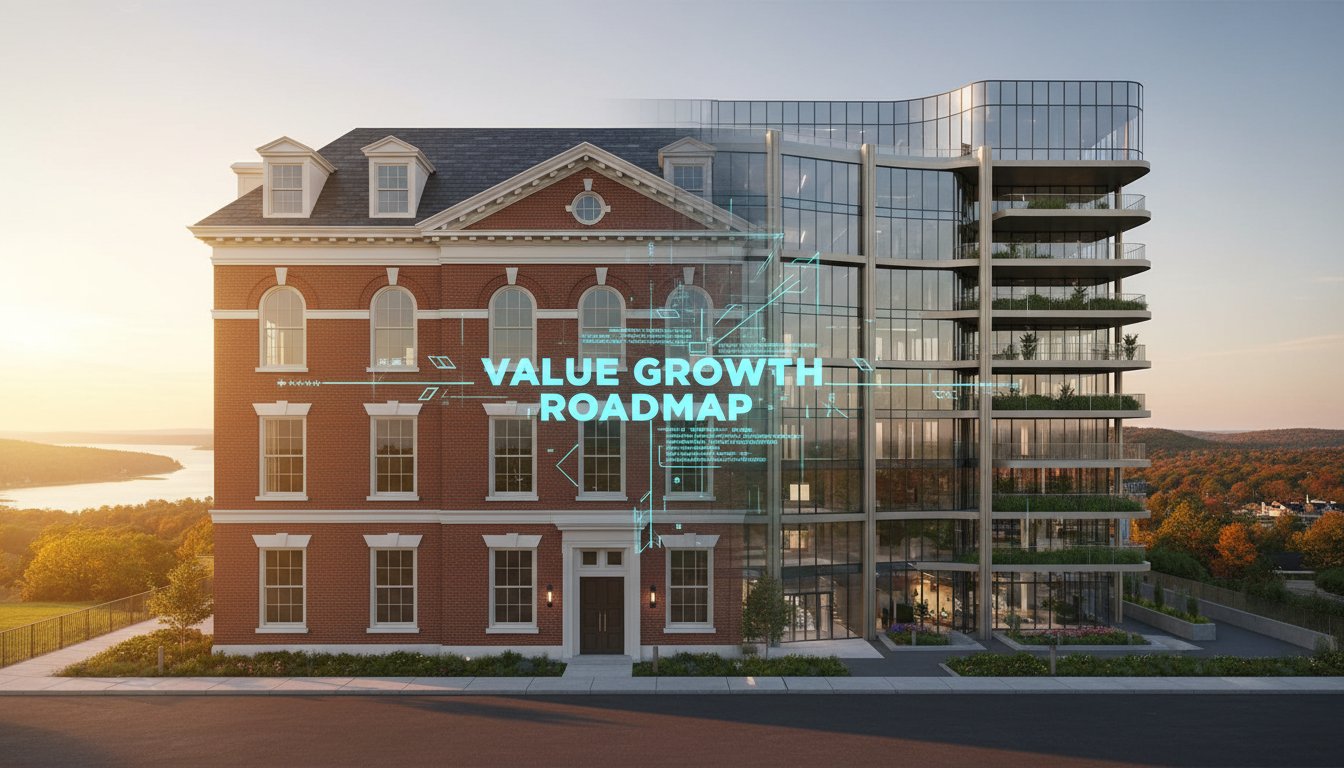
Real estate is the physical sanctuary where your business’s history unfolds. At 41 Legacy, we recognize that a masterwork requires more than just skilled labor; it demands a conductor. We act as your primary real estate consultant, integrating property strategy into a larger, more profound narrative. This isn't about simple square footage. It's about stewardship. We utilize the Value Growth Roadmap as our guiding score, ensuring every architectural or land-based decision serves the long-term health of your estate. This central document prevents fragmented decision-making, ensuring your assets protect the "Soul" of the enterprise while simultaneously driving the highest possible market valuation.
The Coordinated Advisory Team
Strategic clarity requires a unified front. Professional real estate strategy can't happen in a silo. We synchronize the efforts of your CPA, attorney, and wealth managers to ensure every gear in the machine turns in harmony. Our Coordinated Business Advisory model eliminates the friction that occurs when specialists don't communicate. Consider the risks involved when an attorney drafts a lease that doesn't align with the tax strategy your CPA meticulously designed. We occupy the Quarterback role to catch these discrepancies before they become liabilities. We ensure the legal language of your property holdings actively supports the financial goals of your legacy.
- Silo Elimination: We bridge the gap between legal structures and tax efficiencies.
- Strategic Alignment: Every lease and title adjustment must reflect the Value Growth Roadmap.
- Risk Mitigation: Centralized oversight prevents conflicting advice from disparate vendors.
Execution Through Implementation Support
A vision without execution is merely a dream. We transform "good ideas" into "transferable assets" through meticulous monthly implementation support. This is where the artistry of our process meets the precision of engineering. While approximately 80% of business owners fail to successfully exit their companies due to poor planning, our approach ensures your property is ready for the spotlight. We don't just offer advice; we provide the hands-on craftsmanship required to polish your assets to a high sheen.
As your real estate consultant, we maintain an uncompromising commitment to excellence. We move beyond the conceptual to ensure your property is a tangible reflection of your life’s work. This monthly rhythm of refinement ensures that when the time comes to transition, your legacy is both beautiful and effortlessly transferable. You've spent a lifetime building something extraordinary. It's time to ensure its foundation is as enduring as the history you've written. Begin your Enterprise Diagnostic today and secure the future of your masterpiece.
Architecting Your Permanent Heritage
Your enterprise is more than a sequence of transactions; it's a living narrative of dedication and technical precision. True stewardship requires moving beyond the surface of property ownership to understand how every square foot influences your overall valuation. By engaging a strategic real estate consultant, you transform static assets into dynamic instruments of growth. Our Enterprise Diagnostic process identifies the hidden architecture of your business, ensuring that your physical footprint enhances rather than hinders your exit readiness.
The path to a significant transition demands the steady hand of a Certified Exit Planning Advisor (CEPA). We utilize a proven "Quarterback" model to harmonize your real estate strategy with your broader financial roadmap, much like a master craftsman aligns the intricate components of a bespoke engine. This meticulous coordination ensures your work endures for generations. Your vision deserves a guardian who values your history as much as your future potential. It's time to refine your strategy and claim the value you've spent a lifetime building.
Secure Your Legacy with a Value Growth Roadmap
The evolution of your life's work begins with a single, uncompromising step toward excellence.
Frequently Asked Questions
What is the primary difference between a real estate consultant and a real estate agent?
A real estate agent focuses on the mechanics of a transaction, while a real estate consultant provides the strategic vision necessary to integrate property into a broader financial legacy. While agents earn commissions on individual sales, consultants typically work on a fee-for-service basis to provide unbiased, high-level analysis. This distinction ensures your property decisions aren't just isolated events but are instead purposeful steps toward enduring stability.
How much does a real estate consultant typically charge for a business assessment?
Professional fees for a bespoke assessment often range from $150 to $500 per hour depending on the complexity of the asset portfolio. National data from the Bureau of Labor Statistics indicates management consultants earn a median hourly wage of $45.81, though elite specialists in the property sector command higher premiums for their expertise. Most high-end assessments for complex estates involve a fixed project fee that reflects the meticulous nature of the work.
Can a real estate consultant help with a business exit plan?
A consultant plays a pivotal role in crafting a business exit plan by identifying hidden value within your property holdings before a sale. They prepare the asset for its next chapter, ensuring that 100% of the property's potential is realized before the final signatures are dry. By aligning the real estate with the business's operational needs, they create a seamless transition that honors the history of the enterprise while securing its future.
Do I need a real estate consultant if I already have a commercial broker?
You need a real estate consultant because their perspective is broader than the immediate close of a deal. Brokers are essential for market access, but a consultant serves as a guardian of your long-term interests, ensuring every move fits your specific aesthetic and financial standards. They provide the uncompromising oversight needed to verify that a commercial broker's proposed transaction doesn't compromise the integrity of your overall estate.
How does real estate impact the enterprise value of my company?
Real estate significantly impacts enterprise value, as property assets can account for nearly 30% of a firm's total capital. A consultant analyzes these assets to improve the debt-to-equity ratio and enhance the balance sheet's attractiveness to potential investors. This meticulous approach transforms a static physical space into a dynamic engine of growth, directly increasing the multiple applied to your company's earnings during an acquisition.
What are the benefits of hiring a real estate consultant for a family business?
For a family business, a consultant provides a bridge between generations, preserving the heritage of the founding vision while adapting to modern market demands. They offer an objective, authoritative voice that helps resolve internal conflicts regarding the property's future. By implementing a bespoke strategy, they ensure the family's most valuable tangible assets are protected from short-sighted decisions that could erode the legacy's foundation.
What qualifications should I look for in a real estate consultant?
Look for a professional who holds a Counselor of Real Estate (CRE) designation, a credential held by fewer than 1,100 professionals globally. This mark of excellence signifies a commitment to the highest ethical standards and deep technical proficiency. You should also prioritize advisors with a proven track record in your specific industry, ensuring they possess the surgical precision required to handle the complexities of your unique property portfolio.
How does a consultant help with "Highest and Best Use" analysis?
A consultant approaches "Highest and Best Use" as an exercise in both art and engineering, evaluating a site's potential through a rigorous four-step analytical framework. They examine zoning laws, market demand, and construction costs to identify the specific use that generates the greatest financial return. This process ensures that your land isn't just occupied, but is instead fulfilling its most noble and productive purpose within your broader portfolio.
Disclaimer
This article is for educational and informational purposes only and does not provide legal, tax, investment, or business brokerage advice. 41 Legacy does not offer M&A brokerage services, legal document drafting, tax preparation, or investment advisory services. Business owners should consult licensed professionals in those disciplines before making decisions related to business transactions, legal matters, tax strategy, or financial planning. All examples are illustrative and may not apply to your specific situation.