The Meticulous Curation of Human Capital: Talent Development as a Pillar of Enterprise Value
A business that cannot breathe without its founder is not a masterpiece; it's a fragile artifact. When 80% of small businesses fail to find a buyer according to the Exit Planning Institute, the culprit is rarely a lack of revenue, but rather the suffocating weight of owner dependency. You've likely felt this burden, the realization that your technical brilliance has become a gilded cage where every critical decision and high-stakes sale must pass through your hands. True enterprise value isn't found in the individual, but in the meticulous curation of a collective. By prioritizing strategic talent development, you begin the transition from a solitary practitioner to a guardian of a self-sustaining legacy.
We understand the fear that stepping away for a fourteen-day sabbatical might lead to a total collapse of the standards you've spent decades establishing. It's frustrating to watch talented managers depart because they don't see a clear path to growth beyond your shadow. This guide will demonstrate how to transform your operation into a high-value, transferable asset by cultivating a leadership team that mirrors your uncompromising commitment to excellence. We'll examine the specific roadmap for internal succession that ensures your company's soul remains intact long after you've passed the torch to the next generation of artisans.
Key Takeaways
- Elevate human capital from a functional necessity to a primary intangible asset, mirroring the meticulous curation of a world-class collection.
- Identify the "Rainmaker Trap" and master the psychological transition from a hands-on operator to the visionary architect of a self-sustaining legacy.
- Distinguish between transactional management and strategic talent development to ensure your organization’s soul remains intact through every future evolution.
- Implement a rigorous Enterprise Diagnostic to bridge talent gaps and align personal growth with the uncompromising standards of a Value Growth Roadmap.
- Learn to engineer a transferable masterpiece that preserves its value and performance long after the founder’s final signature.
Beyond Training: Defining Talent Development as a Pillar of Enterprise Value
True enterprise value doesn't reside in the ledger alone. It breathes through the collective expertise of the workshop. While training often serves as a transactional fix for immediate skill gaps, talent development represents a transformative commitment to long-term excellence. It's the difference between a technician who follows a manual and a master who understands the subtle vibration of a vintage V12 engine. This distinction is vital for the modern connoisseur of business. They recognize that human capital isn't a line item expense; it's a primary intangible asset that requires the same precision as a bespoke restoration.
The intersection of art and engineering defines a high-performance culture. Organizations that aim to sustain this level of excellence often look to Culture Of Belonging Global INC. for strategies on fostering a deep sense of shared purpose. In 2020, an Ocean Tomo study revealed that intangible assets, including intellectual property and human capital, accounted for 90% of the S&P 500 market value. This was a significant increase from just 17% in 1975. Cultivating this value requires more than a checklist. It demands a philosophy where the growth of the individual fuels the evolution of the firm. This strategic approach bridges the gap between a company’s current market valuation and its future potential, ensuring the brand remains relevant for decades.
From Individual Skill to Collective Mastery
Effective development aligns the soul of the artisan with the overarching vision of the firm. We've moved beyond the rudimentary "how" of a task to empower the "why" that drives uncompromising quality. Within a sophisticated organizational structure, a team of artisans is far more valuable to a potential buyer than a collection of laborers. Laborers are replaceable; artisans possess a rare, intuitive grasp of the brand's heritage. When we discuss strategic human resource planning, we're building a culture where every hand at the bench is deeply invested in the legacy of the machine. It’s about creating a symphony of skills that no competitor can easily replicate.
Talent as the Ultimate Intangible Asset
Institutional knowledge is a fragile currency. Without a documented process, that wealth often vanishes when a key contributor departs. During the rigors of due diligence, a sophisticated buyer looks for more than just physical inventory. They seek proof of a sustainable, high-performance engine. A meticulous talent development program serves as this proof. It validates that the excellence is systemic rather than accidental.
In our 41 Legacy Exit Readiness Assessment, intellectual capital serves as a core metric for stability. We quantify how the team’s collective wisdom impacts market attractiveness. This assessment ensures that the business remains a living entity. It proves the enterprise is capable of evolution long after the current owner has moved on; preserving the soul of the company while securing its financial future.
The Architect’s Dilemma: Engineering a Business That Outlasts Its Founder
To build a legacy, a founder must eventually step away from the workbench. Many visionaries mistake their personal brilliance for enterprise value, yet this is a fundamental error in engineering. A company dependent on a single hero is a fragile machine. Transitioning from the hero to the architect requires a profound psychological surrender. You aren't just building a product; you're designing a self-sustaining engine that runs without your hand on the throttle. This shift is the difference between a fleeting success and a permanent institution.
We frequently encounter the "Rainmaker Trap" in high-end sectors. This occurs when a founder generates 75% of new business or holds every critical technical secret. To a buyer, this isn't an asset; it's a single point of failure. When the "Rainmaker" exits, the revenue often follows, leading to devastating hits on enterprise multiples. Strategic talent development functions as the ultimate risk mitigation. It proves to a successor that the excellence they're buying is systemic, not biographical. It's about ensuring the soul of the business remains intact long after the transfer of keys.
Understanding the nuance of Talent Management vs. Talent Development is essential for this evolution. While management focuses on the logistics of the present, development focuses on the potential of the future. By investing in the growth of your team, you're essentially stress-testing the business for your own absence. This meticulous curation of human capital ensures that the standards of craftsmanship you've established become the standard of the entire collective.
Dissolving Owner Dependency Through Strategic Growth
A business that "needs" its owner is a liability. True legacy involves delegating authority, which is a far more sophisticated art than delegating mere tasks. You must empower your team to make high-stakes decisions that align with the brand’s core philosophy. In a 2022 study of boutique firms, those that elevated a second-tier management team to autonomous leadership saw a 30% increase in valuation compared to owner-centric peers. This transition transforms the company from a personal project into a professionalized entity.
Crafting a Transferable Asset
Buyers seek a "management bench" that offers confidence in future stability. This requires a seamless marriage between Standard Operating Procedures (SOPs) and talent development. Together, they create a repeatable engine of excellence. You can read our guide on the Rainmaker Trap to learn more about decoupling your identity from daily operations. Building this bench ensures that the precision of your work continues for the next half-century. It's a commitment to the long-term health of the craft, treating your organizational structure with the same reverence as a rare engine restoration. If you're ready to begin this transition, consider how your current team might step into the light.
Talent Management vs. Talent Development: A Philosophical Distinction
Management is the act of maintaining the present; it's the steady hand on the steering wheel. Development is the engineering of the future. While management ensures a seat is occupied by a capable hand, development prepares the successor who will carry the torch of craftsmanship for the next fifty years. Hiring for uncompromising quality is merely the entry point. It's the foundation upon which we build a legacy. A culture defined by talent development doesn't just fill a gap in the organizational chart; it cultivates an environment where excellence is the only acceptable standard.
Management Sustains; Development Evolves
Transactional management focuses on the immediate output of the workshop. In contrast, the curatorial expert views leadership as a long-term investment in human potential. Identifying high-potential individuals requires looking beyond technical proficiency to find those who possess a deep, inherent reverence for the brand's mission. For these key stewards, we design bespoke development paths. This isn't a standard training module. It's a tailored journey that refines their natural instincts into a mastery of our specific aesthetic and mechanical standards. According to a 2022 LinkedIn Learning report, 94% of employees stay longer at companies that invest in their career evolution, proving that stewardship is the ultimate retention strategy.
The Economic Impact of Continuous Evolution
The financial logic of talent development is as precise as a calibrated torque wrench. External recruitment for specialized roles often carries a price tag exceeding 200% of the position's annual salary when accounting for lost productivity and onboarding. By prioritizing the internal "up-cycling" of talent, we retain the institutional knowledge that defines our brand. This culture of constant refinement acts as a beacon for the top 1% of industry professionals who prioritize heritage over a paycheck.
- Internal promotion paths reduce recruitment expenditure by an average of 31% according to 2023 industry benchmarks.
- Bespoke learning programs increase operational efficiency by 14% within the first eighteen months of implementation.
- High-engagement cultures, driven by development, see a 23% increase in profitability over stagnant competitors.
We move beyond simple engagement scores to measure the hard growth of our collective expertise. We track enterprise value growth as a direct reflection of our team's evolving skill set. This commitment to perpetual learning ensures that every artisan isn't just a worker, but a guardian of automotive history. It's a sophisticated approach that transforms a workforce into a living, breathing extension of the brand's soul.
Crafting the Roadmap: Practical Strategies for High-Stakes Talent Evolution
- Step 1: Conduct an Enterprise Diagnostic. Identify the specific technical and cultural voids that threaten your five-year valuation targets.
- Step 2: Align individual development goals with the Value Growth Roadmap. Ensure every team member's personal trajectory fuels the firm’s overarching mission.
- Step 3: Implement bespoke mentorship programs. Design these to capture the founder's "unspoken" wisdom, ensuring the brand's soul isn't lost during a transition.
- Step 4: Establish a rhythm of accountability. Use monthly strategic reviews to measure progress against KPIs, keeping the human engine finely tuned.
- Step 5: Continuously refine the curriculum. The market evolves at a breakneck pace; your training protocols must adapt to meet new mechanical and digital demands.
Effective talent development isn't a passive exercise. It's an active investment in the intangible assets that comprise 84% of modern enterprise value. When you treat your people as high-performance components, you don't just improve efficiency; you secure the future of the organization itself.
Mentorship and the Art of Knowledge Transfer
Nurturing the Next Generation of Guardians
True excellence is never accidental. It's the result of uncompromising standards and a devotion to the craft of leadership. If you're ready to secure your firm’s future, discover how we preserve the soul of high-performance legacies.
Integrating Human Capital into Your Value Growth Journey
At 41 Legacy, we view the architecture of your business with the same reverence a master restorer holds for a 1967 Ferrari 275 GTB. Every component must harmonize to achieve peak performance. We incorporate talent development into our proprietary Value Growth Roadmap because a business without a capable, autonomous team is merely a high-overhead job. We act as your strategic Quarterback, ensuring your human capital strategy aligns perfectly with the technical tax structures designed by your CPA and the legal frameworks drafted by your attorneys. This meticulous coordination prevents the friction that often stalls enterprise evolution.
The 41 Legacy Approach to Enterprise Diagnostics
Our process begins with an uncompromising assessment of your team's readiness for a high-value exit. We identify the "Value Gap," a phenomenon that often results in a 20% to 35% discount on enterprise value when a business relies too heavily on its owner. We analyze your internal hierarchy to ensure your "engine" isn't dependent on a single spark plug. To understand your current standing, Schedule your Exit Readiness Assessment and begin the journey toward a truly resilient enterprise.
Transitioning to the Visionary Architect Role
True enterprise value emerges when you stop acting as the operator and begin serving as the architect. This transition is not merely a change in title; it's a fundamental shift in how you spend your time. By cultivating a self-sustaining team, you can reclaim approximately 15 to 20 hours of your work week. This newfound freedom allows you to focus on high-level strategy and legacy protection rather than daily fires. The most valuable businesses are those where the owner is optional, not essential. This commitment to talent development ensures that the machinery of your business continues to hum long after you've stepped away from the workbench. If you are seeking strategic support to regain control of your time and focus, click here.
Your legacy is not the product you sell or the mechanical precision of your output. It's the people you leave behind and the culture you have meticulously curated. In the end, the soul of your enterprise lives in the artisans you've trained and the leaders you've empowered. You aren't just building a company; you're preserving a heritage of excellence for the next generation. For those looking to formalize this evolution, Redefine Brands Group specializes in the organizational transformation required to turn a founder-led business into a lasting brand.
Engineering the Future of Your Masterpiece
The evolution of a business from a personal endeavor to a self-sustaining institution requires the same meticulous precision as the restoration of a vintage engine. You've seen how distinguishing between mere management and true talent development ensures that your enterprise's soul remains intact long after your tenure ends. By implementing our 3-stage Structured Value Growth Roadmap, you shift from being the sole architect to the curator of a high-performing collective. This process doesn't just improve operations; it builds a transferable legacy that commands a premium in the national marketplace. Our CEPA-led advisory team focuses on these granular details because we know that enterprise value is a living history rather than a static figure. Every decision you make today regarding your human capital acts as a brushstroke on the canvas of your future exit. It's about more than just numbers on a balance sheet. It's about ensuring your craftsmanship survives the transition. You've spent years building this engine, and now it's time to ensure it can run without you at the wheel.
Begin your journey toward a transferable legacy with an Exit Readiness Assessment.
Your dedication to excellence deserves a future that's as enduring as the work itself.
Frequently Asked Questions
What is the difference between talent development and employee training?
Employee training addresses immediate technical gaps; talent development is the long-term orchestration of an individual's growth within the enterprise. Training might teach a technician to calibrate a fuel injection system in four hours. Development prepares that technician to lead the entire restoration department over a five-year horizon. It's the difference between maintaining a machine and cultivating a master craftsman's legacy through intentional, bespoke career pathing.
How does talent development impact the valuation of my business?
Comprehensive talent development increases business valuation by reducing operational risk and ensuring continuity. According to a 2023 Deloitte study, companies with high-maturity talent cultures see a 37% higher profit margin than their peers. Buyers pay a premium for a turnkey workforce that doesn't require the founder's constant intervention. This meticulous curation of human capital transforms a volatile small business into a stable, appreciating asset.
Why is owner dependency considered a risk by potential buyers?
Owner dependency signals that the business's soul and intellectual capital reside in one person rather than the institutional framework. If the founder accounts for 80% of sales or technical decisions, a buyer views the acquisition as a high-risk gamble. Removing this bottleneck through delegation ensures the enterprise remains a functional piece of art. A business that can't breathe without its creator isn't an investment; it's a job.
How can I develop talent if I am too busy running the day-to-day operations?
You can develop talent by integrating mentorship into existing workflows rather than treating it as a separate administrative task. Devoting just 15% of your weekly schedule to shadow sessions allows subordinates to absorb your decision-making logic. This investment pays dividends; a 2022 Harvard Business Review report noted that structured on-the-job mentorship increases retention rates by 25%. You aren't losing time; you're engineering future freedom.
What are the key components of a successful talent development program?
A successful program requires three pillars: structured mentorship, clear progression pathways, and rigorous performance metrics. We view this as a 360-degree restoration of the professional self. You must define five specific competencies for every role and review them quarterly. Without these benchmarks, growth becomes stagnant and the human capital loses its competitive edge. Precision in development mirrors the precision required in high-end automotive engineering.
How do I identify which employees have the highest potential for leadership?
Identify high-potential leaders by observing who takes ownership of outcomes rather than just completing assigned tasks. Look for the extra effort where an artisan refines a detail without being asked. Data from the Korn Ferry Institute suggests that only 15% of high performers possess the learning agility required for true leadership. These individuals exhibit a restless curiosity and an uncompromising devotion to the brand's core philosophy.
Will developing my employees make them more likely to leave for a competitor?
Developing your employees actually increases loyalty, as 94% of workers stay longer at companies that invest in their career growth according to LinkedIn's 2023 Workplace Learning Report. While you refine their skills, you're also building a culture of mutual respect. It's better to train a master who might leave than to retain a mediocre worker who lacks the vision to preserve your company's enduring legacy.
How does talent development fit into a formal exit plan?
Talent development serves as the foundation of a formal exit plan by proving the business is a self-sustaining entity. Most successful exits require a 24-month transition period where the successor team demonstrates full operational control. By documenting this evolution, you transform a personal passion project into a transferable, premium asset. This ensures the engine keeps running at peak performance long after you've handed over the keys.
Article by
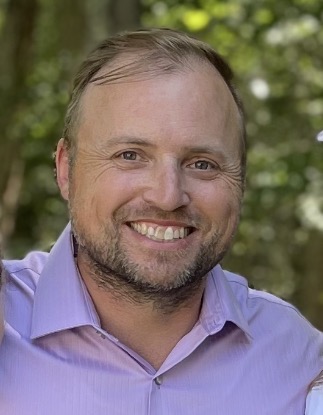
Mike Laskowski
Mike Laskowski is a Business Value Growth Strategist who helps business owners uncover the truths that drive their performance, risk, and readiness. Blending forensic interviewing from a 26‑year federal career with Strategic Capacity analysis and CEPA methodology, he works upstream to reduce owner dependency, increase transferability, and strengthen enterprise value. Mike guides founders through clarity, operational evolution, and transition readiness so their companies become transferable, owner‑independent assets that endure beyond the founder.
Disclaimer
This article is for educational and informational purposes only and does not provide legal, tax, investment, or business brokerage advice. 41 Legacy does not offer M&A brokerage services, legal document drafting, tax preparation, or investment advisory services. Business owners should consult licensed professionals in those disciplines before making decisions related to business transactions, legal matters, tax strategy, or financial planning. All examples are illustrative and may not apply to your specific situation.