The Invisible Ceiling: Signs You Are Too Involved in Your Business and Why It Limits Your Legacy
A masterpiece cannot breathe if the artist never puts down the brush. We often mistake our constant presence for dedication, yet this relentless oversight is the invisible ceiling that halts evolution. The most profound works of art, much like the most valuable enterprises, must eventually stand on their own merit. You've spent years refining your craft; however, you likely feel the weight of every decision resting solely on your shoulders. It's exhausting to realize that without your daily input, the gears of your legacy would simply cease to turn.
By identifying the subtle signs you are too involved in your business, you can shift from being the primary engine to the visionary architect. Businesses heavily reliant on their owners frequently struggle with lower valuations and market appeal compared to truly autonomous organizations. You'll learn how to transform your daily operations into a high-value asset that thrives without your intervention. We will examine the critical indicators of dependency and the meticulous steps required to build a company that grows independently, ensuring your life's work remains a lasting testament to excellence.
Key Takeaways
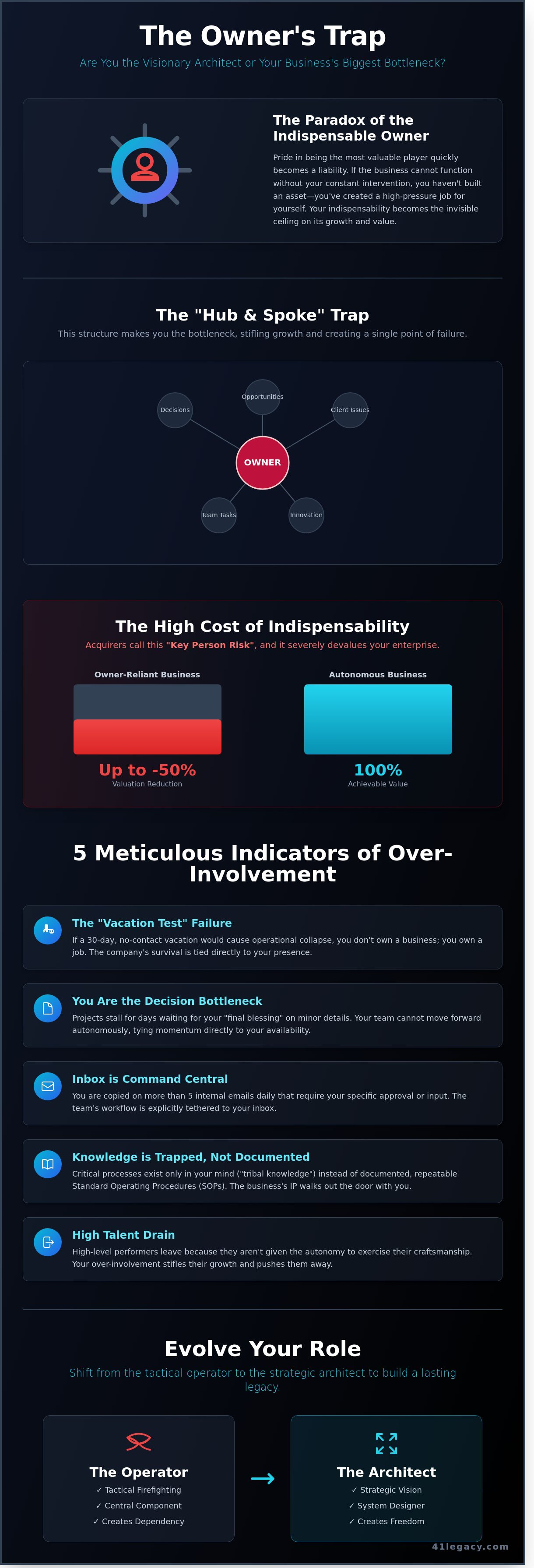
- Recognize the "Hub and Spoke" trap where your indispensable nature as a leader becomes the enterprise’s most significant structural liability.
- Identify the meticulous signs you are too involved in your business, including the critical "Vacation Test" and the diagnostic markers of a decision-making bottleneck.
- Uncover why high-level acquirers view owner dependency as a "Key Person Risk" that diminishes the valuation and perceived permanence of your life’s work.
- Learn to evolve from a tactical operator into a strategic architect by implementing uncompromising systems that preserve your company’s soul.
- Master the bespoke methodology for closing the "Value Gap," ensuring your business remains a transferable asset that thrives beyond your daily presence.
The Paradox of the Indispensable Owner: When Your Presence Becomes a Prison
A business is a complex mechanism, much like a vintage V12 engine. If every rotation of the crankshaft requires your manual intervention, you haven't built a machine; you've become a component. This is the central paradox of the indispensable owner. While many founders take pride in being the most valuable player, this status quickly transforms into a liability that threatens the very heritage they wish to build. True craftsmanship requires the creation of a system that outlasts its creator. When you can't step away for a single afternoon without the gears grinding to a halt, you aren't an owner. You're simply the operator of a very expensive, very demanding job. Identifying the signs you are too involved in your business requires a cold, clinical look at your daily operations and the legacy you're actually leaving behind.
The Hub and Spoke Model Explained
Visualize your enterprise as a wheel. In a healthy structure, the rim supports the weight and the spokes distribute the pressure. In the hub and spoke trap, every decision and every creative spark must pass through you at the center. This creates an inevitable bottleneck that stifles innovation and slows the pace of evolution. When a 1964 Ferrari 250 GTO undergoes restoration, the lead artisan doesn't tighten every nut personally; they ensure standards are met through a meticulous, documented process.
The Emotional Weight of Indispensability
The transition from pride to exhaustion is often subtle. Founders frequently fall in love with the "hero complex," believing their personal touch is the only thing maintaining the soul of the brand. This mindset frequently leads to Founder's syndrome, a psychological state where the creator's ego becomes a barrier to the organization's necessary growth. You must move from being the Rainmaker to the Steward. In our pursuit of excellence, we focus on the legacy of the vehicle, not just the hands currently working on it. A true master ensures the art survives their absence. If the business cannot breathe without your lungs, it doesn't have a soul of its own yet. It's merely a reflection of your own fatigue.
- The Bottleneck Effect: Projects stall for days awaiting your final "blessing" on minor details.
- The Valuation Gap: Potential investors see your expertise as a single point of failure rather than an asset.
- The Talent Drain: High-level artisans leave because they aren't given the autonomy to exercise their own craftsmanship.
Moving beyond these signs you are too involved in your business isn't about doing less. It's about elevating your role to a higher plane of leadership. It's the difference between being the engine and being the architect who designed it to run for a century.
Five Meticulous Indicators of Excessive Business Involvement
A business, much like a vintage racing engine, must eventually achieve a state of self-sustaining harmony. If the machinery requires your constant physical presence to maintain its rhythm, you've created a masterpiece of dependency rather than a legacy of value. The most profound diagnostic is the 30-day vacation test. If your absence for one month would lead to total operational collapse, you don't own a transferable asset; you own a high-pressure job. This lack of autonomy is one of the primary signs you are too involved in your business.
Operational Red Flags in Daily Workflow
Workflow friction manifests when "tribal knowledge" replaces documented SOPs. When the intricacies of your process exist only in your mind, you become the ultimate bottleneck. If you're copied on more than 5 internal emails daily that require your specific sanction, the team's momentum is tethered to your inbox. You must audit your calendar to distinguish between Operator tasks and Architect tasks. True artisans understand that their role is to design the system, not to be the fuel that powers it. Relying on a bespoke management framework allows the craftsmanship to continue without your direct intervention.
Financial and Strategic Warning Signs
Revenue stagnation is rarely a market issue; it's often a capacity issue. Data indicates that founder-led firms often hit a ceiling when the owner reaches their personal 50-hour weekly bandwidth. This leads to the "Founder’s Discount" during valuation. Professional buyers frequently reduce offers by 20% to 40% when they perceive the brand's soul is tied exclusively to one person. In the classic study The Founder's Dilemma, this conflict between personal control and scalable wealth is highlighted as a pivotal choice for any creator.
When clients know your first name but can't identify your lead engineers, you've failed to build a brand that outlives your presence. This environment stifles top talent. Your best employees will leave if they're denied the autonomy to execute their craft. Even the signing authority trap, where you're the only person capable of authorizing a $500 payment, signals a fundamental lack of trust in the very legacy you're trying to build. A business that cannot breathe without you is not a triumph; it's a cage.
The Valuation Trap: Why Your Presence Devalues Your Enterprise
A business should be a masterpiece of autonomous engineering, not a fragile performance of individual will. When a founder becomes the sole architect of every operational decision, the enterprise loses its capacity for independent flight. This creates a profound "Value Gap." It is the silent discrepancy between what your company is worth with you at the helm versus its market value the moment you step away. Sophisticated buyers, particularly private equity firms and strategic acquirers, view owner dependency as a structural flaw. They don't buy history; they buy the future. If that future requires your constant intervention, the price they are willing to pay collapses.
Data from the 2023 BizBuySell Insight Report indicates that businesses with documented, owner-independent systems command multiples up to 25% higher than those reliant on founder intuition. Recognizing the signs you are too involved in your business is essential for protecting your equity. When you are the primary engine, your business is merely a high-paying job. To transform it into a legacy, you must remove yourself from the critical path of daily operations.
Understanding Key Person Risk
Sophisticated investors are clinical in their assessment of "Key Person Risk." They won't pay premium prices for an organization that effectively walks out the door at 5:00 PM. If you are the person who closes 80% of the deals or manages the 5 most critical vendor relationships, you are a liability. Buyers frequently apply a discount of 30% or more to the valuation to account for the cost of replacing your specific expertise. Enterprise value is built on the predictability of future cash flows, not the charisma of the founder. True craftsmanship in business building requires creating a soul for the company that exists independently of your own.
The Transferability of the Asset
A "Transferable Asset" is a company that operates on meticulous systems rather than volatile personalities. It is a machine designed to function with precision regardless of who is turning the key. This transition from person-centric to process-centric is the hallmark of a mature enterprise. Implementing a "Value Growth Roadmap" allows you to identify and repair the friction points that stall your exit. You can begin this journey by completing an exit readiness assessment to determine how much of your current value is tied to your daily presence. By focusing on scalability and uncompromising documentation, you ensure the brand remains a lasting legacy. Even if you never intend to sell, building a business that is ready for exit gives you the ultimate luxury: the choice to stay or the freedom to go.
From Operator to Architect: A Meticulous Path to Freedom
Transitioning from the grease-stained floor of daily operations to the quiet clarity of the architect's drafting table requires more than a shift in mindset. It demands a surgical dismantling of your current role. Identifying the signs you are too involved in your business is the first step in a diagnostic process that separates the artisan from the institution. To preserve the soul of your enterprise while ensuring its survival without your constant touch, you must follow a path of uncompromising structure. This evolution isn't about doing less; it's about becoming more by building a machine that breathes on its own.
- Step 1: Conduct an Enterprise Diagnostic. Pinpoint the 42 specific dependency points where decisions currently stall without your personal intervention.
- Step 2: Implement Comprehensive SOPs. Code the DNA of your process into a manual that ensures the standard of excellence never wavers.
- Step 3: Empower a Second-in-Command. Grant signing authority for transactions up to $25,000 to foster a culture of independent leadership.
- Step 4: Transition Relationships. Shift client loyalty from the individual practitioner to the brand’s enduring heritage.
- Step 5: Focus on Strategic Evolution. Dedicate your energy exclusively to high-level advisory and driving the 3.5x value multiplier.
The Role of Systems and SOPs
For the connoisseur of business, asking what is sop in business is the most vital inquiry. It's the blueprint that turns individual craftsmanship into a scalable, repeatable masterpiece. Without these protocols, your business remains a fragile one-off. With them, it becomes a legacy. By codifying your unique process, you ensure that the 100-point inspection remains flawless, whether you're in the workshop or across the globe. This level of precision is how 78% of successful founders separate their personal identity from their company's daily output.
Building a High-Performance Advisory Team
A master architect doesn't lay every brick; they coordinate a symphony of experts. The Quarterback model involves aligning your CPA, attorney, and financial advisors to drive enterprise value. Engaging a Certified Exit Planning Advisor (CEPA) provides the technical precision needed for this transition. This advisory team acts as a multiplier, allowing you to step back while the value of your life's work continues to accelerate. It's the final cure for the signs you are too involved in your business, creating a structure that stands long after the founder has left the room. To support your personal growth during this transition, you can discover Trainer Terry. Talent development is the engine; strategy is the fuel.
Ready to secure your future and protect your craft? Consult with our legacy experts today.
Preserving Your Legacy: The 41 Legacy Approach to Value Growth
A business is more than a collection of assets; it's a living narrative of your dedication. It possesses a soul. At 41 Legacy, we serve as the guardians of that essence. We understand that the intense focus required to build a masterpiece can eventually stifle its growth. Identifying the signs you are too involved in your business isn't a failure; it's a necessary awakening for any serious founder. Our Value Growth Roadmap is a bespoke architecture designed to decouple your personal identity from daily operations. By reducing owner dependency, we've seen companies increase their valuation multiples by 25% or more. We provide monthly implementation support to ensure the transition from strategic intent to operational reality remains flawless. This process ensures your life's work survives your eventual departure, thriving as a self-sustaining entity.
The Exit Readiness Assessment
Our professional diagnostic functions like a master mechanic’s inspection. We analyze the intricate mechanics of your involvement to reveal the hidden Value Gap. Research from the Exit Planning Institute shows that roughly 78% of small business owners have no formal transition plan, which often leads to a 30% loss in potential value. We bridge this divide by crafting a roadmap that aligns your private goals with the hard reality of market demands. It's a strategic evolution that transforms a high-pressure job into a lasting heritage.
A Commitment to Uncompromising Excellence
We view business transition as an artistic pursuit. It requires the same precision as restoring a vintage racing engine. The 41 Legacy promise ensures your business is both a masterpiece of engineering and a highly transferable asset. We reject compromise. Every system we implement is polished to a high sheen, ensuring the brand maintains its vibration long after you've stepped away. Your life's work is a heritage worth preserving with the utmost reverence.
Engineering Your Masterpiece for the Long Road
A business should function as a self-sustaining engine, not a restrictive cage. When you recognize the signs you are too involved in your business, you're identifying the internal friction that stalls your enterprise’s natural momentum. Data from the Exit Planning Institute reveals that nearly 80% of an owner’s net worth is often locked within their company, yet excessive personal involvement can devalue that asset by half during a sale. True craftsmanship requires you to transition from a daily operator to a visionary architect. This shift ensures the soul of your work remains intact while the machinery runs with autonomous precision.
At 41 Legacy, we provide the national strategic advisory expertise needed to refine your transition. Led by a Certified Exit Planning Advisor (CEPA), our team develops bespoke value growth roadmaps tailored to the unique heritage of your firm. We treat your business like a rare vintage specimen, ensuring every system is polished to a high sheen before it reaches the auction block. It’s time to move beyond the technical minutiae and embrace your role as a curator of excellence.
Secure your legacy with an Exit Readiness Assessment from 41 Legacy
Your life’s work deserves a future that’s as enduring and powerful as the day you first began.
Frequently Asked Questions
How do I know if my business is too dependent on me?
Your business is too dependent on you if it cannot function at 100% capacity for a period of 14 consecutive days without your direct input. When every technical nuance requires your signature, you've built a cage rather than a legacy. We view a business like a vintage engine; it should run with precision long after the master mechanic has set down his tools.
Can a business be sold if the owner is still heavily involved?
A business can be sold while the owner is involved, but it typically incurs a valuation penalty of 30% to 50% during the transition. Buyers view a founder-centric model as a high-risk investment because the institutional knowledge often walks out the door with the seller. To secure a premium price, you must prove the brand's excellence is a result of its systems, not just your personal craftsmanship.
What is the "Hub and Spoke" model in business management?
The Hub and Spoke model describes an organizational structure where every decision and communication flows through the owner at the center. This creates a bottleneck that limits the company's growth to the owner's personal bandwidth and 24-hour daily limit. It's the antithesis of a scalable masterpiece, as it prevents the development of a self-sustaining team of artisans who can uphold the brand's standards.
How much does owner dependency decrease the value of a company?
High owner dependency typically reduces a company's valuation multiple from a 5x EBITDA down to a 2.5x or 3x range. These are undeniable signs you are too involved in your business, as it signals to investors that the brand's intellectual capital is locked within a single person. A company valued at $5 million can quickly drop to $3 million if the owner is the sole keeper of the craftsmanship.
What are the first steps to reducing my involvement in daily operations?
Begin your transition by identifying the 3 most repetitive technical tasks you perform and documenting them into a bespoke training manual. We recommend the Transfer of Mastery approach, where you spend 10 hours mentoring a successor on specific mechanical or administrative nuances. This shift allows you to move from a daily technician to a visionary curator who oversees the evolution of the heritage brand.
Is business owner burnout a sign of a failing business model?
Burnout is a symptom of a structural flaw in the business architecture rather than a failure of the product or service. Data from the Harvard Business Review indicates that 50% of founders experience high levels of stress that compromise the company's long-term viability. It suggests the business is consuming its creator's soul instead of serving as a vessel for their uncompromising vision and professional legacy.
How do SOPs help in increasing the sale price of my business?
Standard Operating Procedures (SOPs) act as a technical manual that increases a company's valuation by approximately 20% during a sale. They transform individual talent into a repeatable, bespoke process that any skilled successor can follow with precision. By documenting every meticulous detail of your operations, you prove that the business's excellence is preserved in its systems, ensuring the craftsmanship remains consistent for decades.
What is the role of a Certified Exit Planning Advisor (CEPA)?
A Certified Exit Planning Advisor (CEPA) orchestrates the strategic transition of a business to ensure the owner's legacy remains intact after their departure. They utilize the Value Acceleration Methodology to align personal, financial, and business goals through a rigorous 90-day sprint process. This professional guidance is essential for transforming a high-performance machine into a transferable asset that commands respect in the elite marketplace.
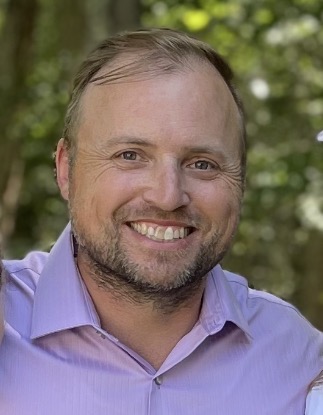
Article by
Mike Laskowski
Mike Laskowski is a Business Value Growth Strategist who helps business owners uncover the truths that drive their performance, risk, and readiness. Blending forensic interviewing from a 26‑year federal career with Strategic Capacity analysis and CEPA methodology, he works upstream to reduce owner dependency, increase transferability, and strengthen enterprise value. Mike guides founders through clarity, operational evolution, and transition readiness so their companies become transferable, owner‑independent assets that endure beyond the founder.
Disclaimer
This article is for educational and informational purposes only and does not provide legal, tax, investment, or business brokerage advice. 41 Legacy does not offer M&A brokerage services, legal document drafting, tax preparation, or investment advisory services. Business owners should consult licensed professionals in those disciplines before making decisions related to business transactions, legal matters, tax strategy, or financial planning. All examples are illustrative and may not apply to your specific situation.