How to Reduce Owner Dependency: Building a Transferable Legacy
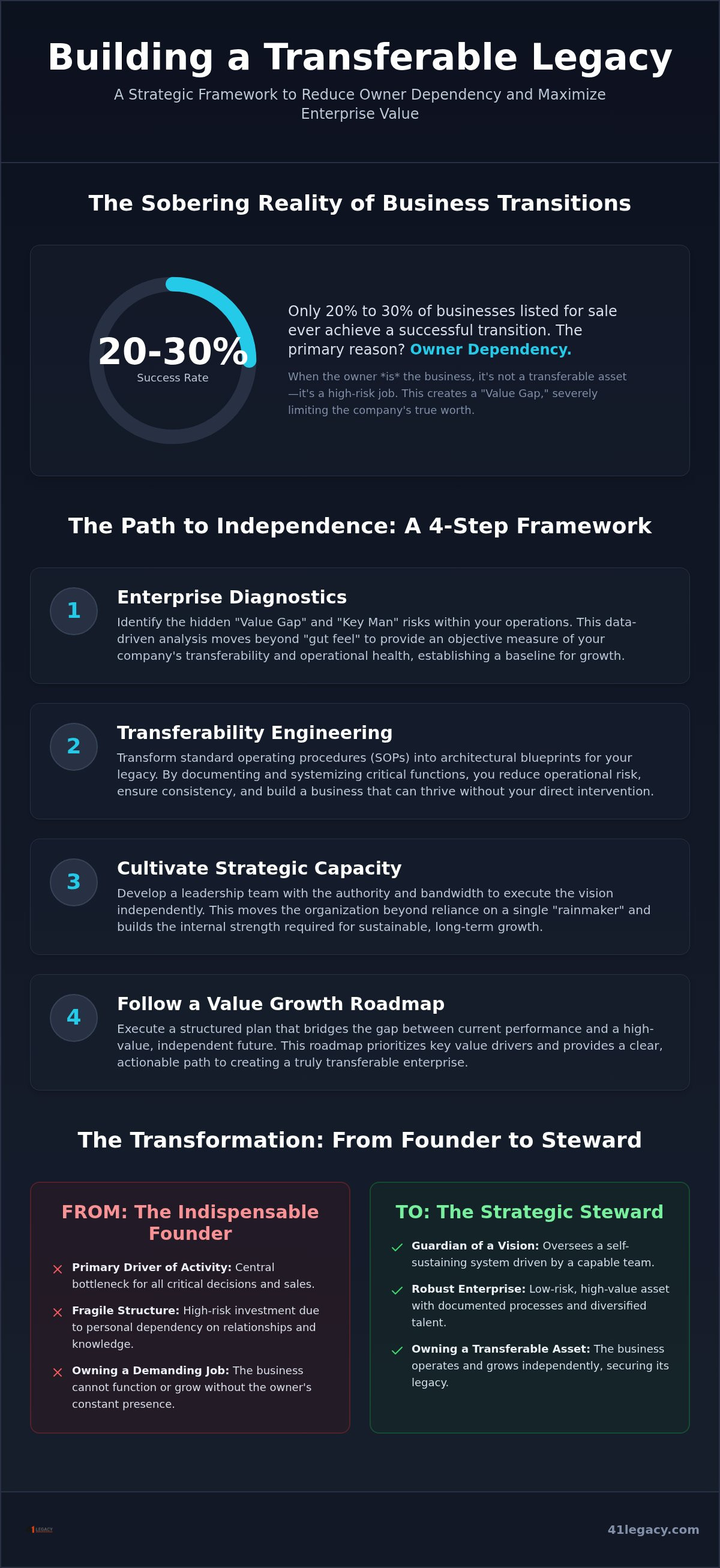
Only 20% to 30% of businesses put on the market actually achieve a successful sale, a sobering statistic that reveals why learning how to reduce owner dependency is the most critical task for any founder. For the dedicated leader, the lack of a sale often stems from a singular, uncomfortable truth: the business is not yet a transferable asset, but an extension of their own daily presence. You may feel like a prisoner to the very legacy you've meticulously crafted, haunted by the suspicion that the entire structure would collapse if you stepped away for a season. We understand that this weight is the primary barrier to true enterprise value.
In this guide, you'll discover the strategic framework to decouple your personal involvement from the company’s performance. We'll explore how to transform your business into a high-value, independent entity that commands a premium in the market. By utilizing Enterprise Diagnostics and the principles of Transferability Engineering, we will outline the path to building a legacy that thrives with or without its architect, ensuring your life's work remains a permanent contribution to the world.
Key Takeaways
- Identify the hidden "Value Gap" within your organization by using Enterprise Diagnostics to reveal where founder-centric operations limit your company's worth.
- Discover how to reduce owner dependency by evolving from the primary driver of daily activity to a steward of a self-sustaining, transferable asset.
- Utilize Transferability Engineering to transform standard operating procedures into architectural blueprints that preserve your legacy and reduce operational risk.
- Cultivate Strategic Capacity within your leadership team, ensuring the organization possesses the internal strength to grow without your direct oversight.
- Follow a structured Value Growth Roadmap that bridges the gap between current performance and the high-value, independent future of your enterprise.
The Silent Erosion: How Owner Dependency Devalues Your Life’s Work
Many founders unknowingly fall into the "Rainmaker Trap," serving as the primary driver of every sale and the singular architect of every operational decision. While this central role feels like a testament to your dedication, it creates a "Value Gap" that erodes your life's work. This gap represents the chasm between what the business is worth today and what it could be worth as a transferable asset. When you are the business, you don't own an asset; you own a demanding job. Mastering how to reduce owner dependency is the only way to bridge this divide, moving from a position of constant labor to one of strategic stewardship.
The Hidden Risks of the Indispensable Founder
An indispensable founder acts as a persistent bottleneck. Every critical choice waits on your desk, slowing the rhythm of the enterprise and stifling the growth of your team. This centralization creates a fragile structure that buyers view with skepticism. If customer relationships are tied solely to your personality, the business possesses no inherent goodwill of its own. It becomes a high-risk investment because the "magic" walks out the door with you. Without a middle-management layer to carry the vision, the company lacks the strategic capacity to thrive independently.
Transferability as the Ultimate Metric of Success
True success isn't measured by annual revenue alone; it's found in the company's ability to function as a self-sustaining entity. While many focus strictly on the bottom line, determining enterprise value requires a deeper look at operational independence. A business that requires your constant touch is significantly less attractive to the market. It's often viewed as an unrefined gem that carries too much weight from its creator, making it difficult for a new owner to maintain its essence.
High-value enterprises are built with the precision of fine art. This is why documented SOPs increase your business value by ensuring consistency without your direct intervention. Effective succession planning starts years before a transition occurs. It involves a deliberate shift in perspective. You are no longer the engine, but the guardian of a legacy. By focusing on increasing enterprise value through systems and talent development, you transform a fragile job into a robust, transferable asset that works for you.
Enterprise Diagnostics: Uncovering the Risks in Your Daily Involvement
Building a legacy that transcends your personal presence requires more than intuition; it demands the clinical precision of Enterprise Diagnostics. This process serves as a sophisticated mirror, reflecting the objective reality of your company's operational health. While many owners rely on a "gut feel" to gauge their success, true transferability is built on evidence. By analyzing the data, we identify the "Key Man" risks that threaten your organization's stability. These are the single points of failure where a process or relationship relies entirely on you. Understanding how to reduce owner dependency begins with this unvarnished look at where the business is fragile and where it is strong.
Strategic Capacity is the essential metric in this evaluation. It asks a simple, yet profound question: does your team possess the bandwidth and authority to execute the vision without your direct intervention? If the answer is no, the business remains a high-risk investment for any future successor. Moving toward a future-ready small business requires a deliberate expansion of this capacity, ensuring the entity can breathe and grow on its own terms.
The Value Growth Roadmap: A Blueprint for Independence
Once the diagnostic identifies the cracks in the foundation, we establish a formal baseline for your current enterprise value. This isn't a static number, but a starting point for a Value Growth Roadmap. We map the journey from high dependency to autonomous operations by prioritizing specific value drivers. These drivers, such as recurring revenue models or diversified customer bases, have the highest impact on your eventual transition. It's a structured path that replaces operational chaos with order, providing a clear vision for the company's independent future.
Identifying Your 'Zone of Genius' vs. Tactical Tasks
The transformation of the enterprise often mirrors the internal transformation of the founder. You must audit your time to distinguish between your "Zone of Genius"—those high-level strategic contributions—and the tactical tasks that act as bottlenecks. Letting go of tactical control is a psychological hurdle. It requires a shift from the role of a daily operator to that of a steward. By learning how to reduce owner dependency through delegation, you empower your team to take ownership of the daily mechanics. If you're ready to see where your business stands, an Enterprise Diagnostic can provide the clarity needed to begin this transition.
Transferability Engineering: The Strategic Role of SOPs
The creation of a transferable legacy requires the same meticulous attention to detail as the restoration of a fine timepiece. We view standard operating procedures (SOPs) not as mundane manuals, but as the architectural blueprints of a high-value enterprise. When you move from tribal knowledge, the unwritten rules stored only in your mind, to a codified system, you're performing an act of transferability engineering. This is a primary pillar in understanding how to reduce owner dependency. It's the process of distilling your unique excellence into a repeatable rhythm that the organization can sustain without your presence.
Precision in these systems is what separates a fragile business from a robust asset. It's a master craftsman’s approach to operations. By ensuring every critical function is documented, you eliminate the ambiguity that leads to errors and operational friction. This clarity is why documented SOPs increase your business value. They dramatically reduce the time required to train new talent and provide a buyer with the confidence that the company's performance is engineered, not accidental.
Systematizing the Critical Path
Effective engineering doesn't require documenting every minor task. Instead, we focus on identifying the top 20% of processes that drive 80% of your company's results. This is the critical path of value creation. We help you build a culture of documentation where systems are treated as living entities. They shouldn't sit on a shelf. They must evolve alongside the business, reflecting modern innovations while preserving the core essence of your work. This ongoing refinement ensures the organization remains agile and prepared for any future transition.
Reducing Customer Reliance on the Founder
A significant risk to transferability is the "magic touch" in sales and account management. If your customers only feel secure when they're speaking with you, the business is anchored to your person. We work to systematize the sales process, ensuring that the excellence your clients expect is delivered by the team and the system, not just the founder. By using technology and CRM platforms to institutionalize customer knowledge, you ensure that vital relationships belong to the enterprise. This shift is essential in learning how to reduce owner dependency and building a team approach that survives your departure.
Cultivating Strategic Capacity: Building the Team That Leads
Strategic Capacity represents the collective strength of an organization to execute its vision without the founder's hands on the wheel. It's the human counterpart to the systems we've engineered. For the founder, this means a fundamental shift in identity. You're no longer the Chief Problem Solver; you're the Strategic Visionary. This evolution is vital for increasing enterprise value. High-level talent isn't attracted to a bottleneck. They seek a canvas where they can contribute to a lasting legacy, and they require the autonomy to master their own domains.
Attracting and retaining this caliber of talent requires a clear path for growth. When your team sees that the company’s success isn't tied solely to your personal output, they begin to view the business as a stable, long-term home for their own careers. This creates a virtuous cycle of excellence. As the team grows in capability, the business grows in value, transforming from a fragile operation into a robust, transferable asset.
Empowering a Leadership Team
Most small businesses operate on a hub-and-spoke model. Every decision, no matter how minute, flows through the center. This structure is the enemy of scale. To truly master how to reduce owner dependency, you must transition to a decentralized leadership structure. This involves training managers to think like owners through radical transparency and clear accountability. We utilize Monthly Implementation Support to ensure this momentum doesn't stall. It provides the external discipline needed to move from the theory of delegation to the lived reality of an independent leadership team.
The Role of the Coordinated Advisory Team
A true legacy isn't built in isolation. It requires a symphony of professional expertise working in concert. Your CPA, attorney, and financial advisors are essential guardians of your wealth, yet they often operate in silos. We serve in a Quarterback role to align these professionals with your specific dependency-reduction goals. Every tax strategy or legal structure must be viewed through the lens of exit readiness. When your internal leadership and your external advisory team move in harmony, you protect the essence of what you've built. Understanding how to reduce owner dependency means ensuring that every professional voice at the table is focused on the long-term health of the enterprise. If you're ready to evaluate your organization's internal strength, our Strategic Capacity Evaluation offers the clarity you need to begin.
The 41 Legacy Path: Executing Your Transition with Precision
The journey toward a transferable legacy is a deliberate progression, moving from the clarity of Enterprise Diagnostics to the strategic execution of a Value Growth Roadmap. At 41 Legacy, we don't view this as a mere transaction. It's a refined process of stewardship. By understanding how to reduce owner dependency, you're not just preparing for an eventual exit; you're building a business that's "ready" today. An exit-ready business is, by definition, a better business to own, offering the freedom to choose your level of involvement while the asset continues to flourish. This is the culmination of Transferability Engineering, where the founder’s vision becomes an inherent part of the company's DNA.
Our methodology ensures that the strategic vision isn't lost to the noise of daily operations. We act as the guardians of your roadmap, providing the objective oversight necessary to bridge the gap between where the business stands and where it must go to achieve its full potential. This structured approach transforms the enterprise into a masterpiece of operational harmony, where every system and every team member moves with a singular, independent purpose. It's about moving from the center of the storm to a position of quiet, authoritative oversight.
The Power of Monthly Implementation Support
The greatest threat to any strategic initiative is the "whirlwind" of daily tasks that demand immediate attention. Monthly Implementation Support provides the external discipline and structured accountability required to keep your dependency-reduction goals on track. We help you monitor specific performance metrics that signal a shift in authority, ensuring that the burden of decision-making is successfully decentralized. A Certified Exit Planning Advisor serves as the architect of this journey, coordinating the technical details while keeping the long-term legacy in focus. This consistent rhythm prevents the roadmap from becoming a forgotten document on a shelf.
Securing Your Legacy
Reducing your personal footprint within the company is the ultimate gift to your employees and your family. It ensures that the essence of what you've built can endure for generations, protected from the risks of founder-centricity. There's a profound peace of mind that comes from owning a truly transferable asset. It's the knowledge that your life's work possesses its own inherent strength, capable of thriving long after your departure. We invite you to treat your business as the masterpiece it is and begin your Exit Readiness Assessment today. This simple step is the first movement toward a future where your business works for you, rather than the other way around.
Securing the Future of Your Masterpiece
The transformation of your company from a founder-led operation to a self-sustaining masterpiece is the ultimate act of business craftsmanship. You've explored how Enterprise Diagnostics reveal the hidden "Value Gap" and how Transferability Engineering codifies your unique excellence into living systems. Mastering how to reduce owner dependency is not merely a strategy for an eventual departure; it's a commitment to the enduring health and independence of the organization you've built.
Led by a Certified Exit Planning Advisor, our team provides a structured "Quarterback" approach to align your professional advisors with your long-term vision. We specialize in building transferable enterprise value, ensuring that your legacy survives the transition from creator to steward. This process provides the clarity and peace of mind that only a truly independent asset can offer.
Treat your life's work with the reverence it deserves by securing its future today. Begin your journey toward a transferable legacy with an Exit Readiness Assessment from 41 Legacy. Your business is a masterpiece. It's time to ensure it endures.
Frequently Asked Questions
What is owner dependency in a business?
Owner dependency is a structural risk where the critical functions of an enterprise rely primarily on the founder's daily presence. It often manifests as the "Rainmaker Trap," where the owner is the sole driver of revenue and strategic decision-making. When a company lacks the internal systems to function independently, it remains a job you own rather than a transferable asset. Identifying this reliance is the first step in learning how to reduce owner dependency and building a legacy that endures.
How much does owner dependency affect business valuation?
High owner dependency can significantly diminish a company's valuation, often by a multiple of 0.5x to 1.5x EBITDA. From a buyer's perspective, a founder-centric business represents a high-risk investment because the enterprise value could vanish once the owner departs. Conversely, businesses that demonstrate operational independence command a premium. By closing this "Value Gap," you transform the entity from a fragile operation into a robust, high-value asset that attracts sophisticated buyers and strategic partners.
What are the first steps to reduce my company's reliance on me?
The initial phase begins with an Enterprise Diagnostic to objectively identify operational bottlenecks and "Key Man" risks. You must audit your daily activities to distinguish between your "Zone of Genius" and tactical tasks that can be delegated. Establishing a baseline for current enterprise value allows you to create a structured Value Growth Roadmap. This roadmap prioritizes the development of a middle-management layer and the documentation of critical path processes, ensuring the organization begins its evolution toward independence.
How long does it take to significantly reduce owner dependency?
Reducing dependency is a time-intensive process of craftsmanship that typically requires two to five years of deliberate execution. It isn't a one-time project but a fundamental shift in the organization's DNA. The timeline depends on the current depth of the management team and the complexity of existing processes. Utilizing Monthly Implementation Support ensures that the transition maintains momentum, allowing the owner to gradually step back while the company’s strategic capacity and enterprise value continue to grow.
Can a business be sold if the owner is still heavily involved?
While a sale is possible, research from the Exit Planning Institute indicates that only 20% to 30% of businesses put on the market actually sell. Buyers often view heavy owner involvement as a primary risk, leading to lower offers or risk-shifting structures like earnouts and seller financing. These mechanisms shift the performance risk back to the seller post-closing. Mastering how to reduce owner dependency before reaching the market is the most effective way to secure a clean, high-value transition.
What is the difference between an owner and a steward?
An owner typically operates at the center of the daily whirlwind, serving as the primary problem solver and decision-maker. In contrast, a steward views the business as a masterpiece to be protected and perfected for the future. Stewardship involves building a transferable asset that possesses its own inherent essence and value independent of the creator. This shift in mindset allows the founder to focus on high-level vision while empowering a leadership team to manage the company's daily excellence.
How do SOPs directly impact my company's exit readiness?
Standard Operating Procedures (SOPs) act as the architectural blueprints of a high-value enterprise. They institutionalize tribal knowledge, transforming individual expertise into a codified system of excellence. This documentation directly impacts exit readiness by reducing training time and operational error rates, which provides buyers with confidence in the company's consistency. Sophisticated investors place a premium on businesses where processes are engineered to be repeatable, as this significantly de-risks the transition and ensures the legacy's continuity.
Why do I need a coordinated advisory team to reduce dependency?
Reducing dependency requires a symphony of professional expertise working in perfect harmony. Your CPA, attorney, and financial advisors often operate in silos, which can lead to fragmented strategies that ignore the broader goal of transferability. A coordinated advisory team, led by a quarterback, ensures that every tax, legal, and operational decision is viewed through the lens of exit readiness. This alignment protects the enterprise value and ensures the roadmap is executed with the precision required for a successful transition.
Article by
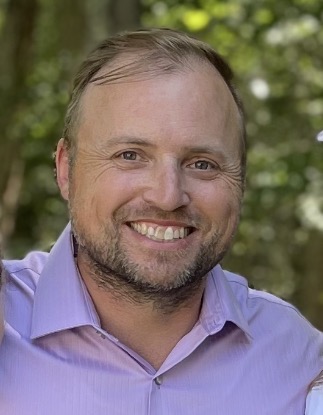
Mike Laskowski
Mike Laskowski is a Business Value Growth Strategist who helps business owners uncover the truths that drive their performance, risk, and readiness. Blending forensic interviewing from a 26‑year federal career with Strategic Capacity analysis and CEPA methodology, he works upstream to reduce owner dependency, increase transferability, and strengthen enterprise value. Mike guides founders through clarity, operational evolution, and transition readiness so their companies become transferable, owner‑independent assets that endure beyond the founder.
Disclaimer
This article is for educational and informational purposes only and does not provide legal, tax, investment, or business brokerage advice. 41 Legacy does not offer M&A brokerage services, legal document drafting, tax preparation, or investment advisory services. Business owners should consult licensed professionals in those disciplines before making decisions related to business transactions, legal matters, tax strategy, or financial planning. All examples are illustrative and may not apply to your specific situation.