How to Make a Business Less Owner-Dependent: Building a Transferable Legacy
A masterpiece that requires its creator's constant hand to remain in motion is not a finished work; it is an unfinished obligation. It's a stark reality that nearly 80% of small businesses are considered unsellable because they are too closely tied to their founders. You've likely felt this burden during those 60-hour weeks where every critical decision rests on your shoulders. Learning how to make a business less owner-dependent is the only way to transform your daily labor into a transferable legacy. It's the difference between owning a job and curating an enduring institution that commands respect.
We understand that your company is your life's work, a bespoke creation built through meticulous effort and uncompromising standards. You deserve the freedom to step back without watching the engine stall. This guide provides the strategic framework to elevate your role from indispensable operator to visionary owner, potentially unlocking substantial enterprise value before an exit. We'll examine the specific systems and cultural shifts required to ensure your business thrives with the precision of a finely tuned engine, even when you aren't at the wheel.
Key Takeaways
- Recognize the "Indispensability Paradox" where your personal presence devalues your legacy, and learn to transcend the limitations of the "Rainmaker Trap."
- Discover the precise methodology of how to make a business less owner-dependent by utilizing Enterprise Diagnostics to bridge the gap between current operations and peak valuation.
- Build a foundation of excellence through the Three Pillars-Systems, Talent, and Governance-turning individual intuition into a repeatable, bespoke framework for success.
- Execute a meticulous transition from operational hero to strategic visionary by identifying and documenting the critical knowledge that defines your company’s soul.
- Align your current efforts with the ultimate goal of exit readiness, transforming your business into a transferable asset that preserves its heritage long after your tenure.
The Indispensability Paradox: Why Your Presence Devalues Your Legacy
Every masterpiece requires a creator. Yet, a true legacy exists beyond the reach of its maker, standing as a testament to craftsmanship that endures long after the artisan has set down their tools. In the private capital market, owner-dependency is the primary value killer. A business tethered to its founder's daily breath is a fragile entity, lacking the structural integrity to survive a transition. When you are the sole engine of your enterprise, you haven't built an asset; you've built a high-pressure job. Learning how to make a business less owner-dependent is an act of preservation. It ensures the soul of the company remains intact while the person is removed from the machinery.
The "Rainmaker Trap" is a common affliction where the founder remains the primary salesperson or lead technician. This creates a ceiling that limits growth to 100% of one person's capacity. While a lifestyle business provides comfort, a transferable asset provides freedom. To achieve a premium valuation, the business must function as a self-sustaining organism. A 2023 study by the Exit Planning Institute revealed that 80% of small to mid-sized businesses fail to sell, largely because they're too dependent on the owner's personal involvement.
The Invisible Ceiling of Founder-Led Growth
Decision-making bottlenecks stifle evolution. When every minor choice requires your approval, the pace of the business slows to your personal bandwidth. This emotional weight of being the hero in every customer crisis is exhausting and unsustainable. Institutional buyers view this as a liability. They aren't looking to buy your talent; they're looking to buy your systems. Integrating robust Succession planning early in the process ensures that excellence is a repeatable standard rather than a personality trait. It moves the business from a collection of tasks to a refined, autonomous engine.
Identifying the Symptoms of Dependency
Honest assessment is the first step toward liberation. You can diagnose the health of your enterprise by looking for these critical indicators:
- The Vacation Test: If the business cannot survive a 14-day absence without your input, it's a fragile operation.
- Revenue Concentration: If you personally generate more than 25% of new business, you're a single point of failure.
- Knowledge Silos: When the "secret sauce" of your craftsmanship lives in your head rather than a bespoke manual, the value is zero to an outsider.
True sophistication lies in the ability to step away. A business that thrives without you is the ultimate expression of your leadership and the only way to ensure your legacy remains uncompromising for decades to come.
Mapping the Architecture of a Transferable Asset
The Value Gap isn't merely a financial deficit; it's a structural flaw in the foundation of your enterprise. If your current valuation sits at $3.2 million but your legacy requires a $6.5 million exit, you're facing a deficit in structural integrity. Enterprise Diagnostics act as a surgical inspection, revealing exactly where the founder's fingerprints act as a bottleneck rather than a catalyst. Mastering how to make a business less owner-dependent transforms the company from a personal job into a Turnkey Masterpiece, a refined asset ready for a sophisticated buyer to acquire with total confidence.
This process relies on a Value Growth Roadmap to neutralize dependency risks. By documenting every bespoke process and uncompromising standard, you ensure the business operates with the precision of a fine-tuned engine. It's about shifting the value from your personal output to the company's collective intelligence.
The Financial Impact of the 'Owner Discount'
Sophisticated buyers apply a heavy discount when they perceive the brand's success is tied to a single individual. In a 2023 analysis by the Exit Planning Institute, companies with high owner dependency saw EBITDA multiples suppressed by as much as 45% compared to their autonomous peers. Transferability serves as the core component of market attractiveness. A Transferable Asset is a business that retains its full value after the founder departs. When systems drive the results, the market responds with premium multiples and competitive offers.
From Operator to Strategic Visionary
True evolution requires a philosophical pivot. You're no longer the mechanic under the hood; you're the architect of the entire workshop. The Value Growth Roadmap provides the sequence for how to make a business less owner-dependent while targeting a 20% annual increase in net cash flow through optimized delegation. This transition redefines your role as the guardian of the brand's long-term legacy. You become the curator of excellence, ensuring the stewardship of your vision remains intact long after you've handed over the keys. It's a meticulous shift from doing the work to protecting the soul of the institution you've built.

The Three Pillars of Owner Independence: Systems, Talent, and Governance
To create a legacy that outlasts its founder, one must master the architecture of autonomy. Understanding how to make a business less owner-dependent requires a fundamental shift from being the engine of the enterprise to being its architect. We view this transition through three distinct lenses: the precision of systems, the cultivation of talent, and the discipline of governance. These pillars ensure that the soul of the brand remains intact even when the founder is absent from the workshop floor.
Systemizing Excellence via SOPs
Precision is our baseline. In 2023, research from the Exit Planning Institute indicated that businesses with meticulously documented processes command a 20% higher valuation than their counterparts. We don't settle for "messy shared drives" or tribal knowledge. Instead, we curate a centralized, digital knowledge base that captures the bespoke nuances of our craft. This turns individual intuition into institutional wisdom.
- Documenting the Intangible: We translate the "feel" of a perfect engine tune into a 150-point digital checklist.
- Living Documents: SOPs are updated quarterly to reflect 2024 engineering standards, ensuring they never become stagnant relics.
- Curatorial Access: Every artisan has instant access to the collective intelligence of the firm, maintaining uncompromising quality across every project.
Empowering the Next Generation of Leaders
True leadership isn't about assigning tasks; it's about fostering outcome-ownership. We identify high-value seats, such as the Master Conservator or the Lead Engineer, and fill them with specialists who possess a deep reverence for the craft. This evolution from a single-point-of-failure to a distributed network of expertise directly impacts the enterprise value of the firm. According to the 2024 Business Value Report, firms with a robust secondary management layer see an average 25% increase in market attractiveness.
We invest in talent development as a form of capital improvement. By moving away from micromanagement, we allow our leaders to exercise their own technical judgment within the framework of our brand's philosophy. This creates a culture where excellence is self-sustaining. When the team owns the result, the founder is no longer a bottleneck but a visionary guide. This is the ultimate expression of how to make a business less owner-dependent while preserving its core essence.
Governance provides the final layer of transparency. We utilize sophisticated Information Systems (IS) to automate routine decision-making and track KPIs with surgical accuracy. These metrics allow for high-level oversight without the need for constant interference. We monitor the health of the legacy through data, ensuring that every vehicle leaving our care meets our uncompromising standards of perfection.
A Meticulous Transition: From Operational Hero to Strategic Visionary
Transitioning away from the center of daily operations is not an act of abandonment. It's a profound act of preservation. To understand how to make a business less owner-dependent, one must treat the enterprise like a rare, high-performance engine. It requires a precise sequence of adjustments to run at peak performance without constant manual intervention. This evolution demands a shift from the tactile work of the artisan to the silent stewardship of the visionary.
- Step 1: Conduct an Enterprise Diagnostic. Utilize a formal assessment to identify your dependency score. According to the 2023 Value Builder Report, businesses with a score below 30% on the owner-dependency scale command 71% higher valuation premiums than their peers.
- Step 2: Extract Critical Knowledge. Identify the nuances of your uncompromising standards that exist only in your intuition. These must be translated into a shared language.
- Step 3: Appoint a Quarterback. Whether through a bespoke hire or a strategic promotion, you need a single point of accountability to manage the daily cadence of the workshop or studio.
- Step 4: Systematic Withdrawal. Gradually step back from client-facing roles. This tests the integrity of your systems while you're still present to calibrate them.
- Step 5: Assume the Role of Guardian. Shift your focus exclusively to high-level strategy and the protection of the brand's long-term legacy.
Phase 1: Knowledge Transfer and Systemization
Capturing your uncompromising standards on paper requires the precision of a blueprint. You aren't just writing manuals; you're codifying the soul of the work. Establish a rhythm of accountability through 15 minute daily huddles and weekly performance reviews. This structure ensures excellence doesn't require your physical presence. Communicate this shift to your team as a collective evolution. Frame it as an investment in their professional mastery and the company's endurance.
Phase 2: The Controlled Withdrawal
The Shadow Phase is the ultimate test of discipline. You must watch your team execute for a full 30 day cycle while resisting the urge to intervene. Use monthly implementation support from external advisors to stay disciplined during this period. Success is no longer measured by your personal output. It's measured by the silence of your phone. If you can sustain a 14 day absence with zero emergency calls, the transition is complete. Your business has become a self-sustaining entity of craftsmanship.
Ready to secure your brand's future? Explore our bespoke legacy planning services to begin your transition today.
Securing the Future: Exit Readiness as the Ultimate Litmus Test
A business that requires your physical presence to function is merely a high-stakes job. True value lies in the creation of a self-sustaining entity; a masterpiece of operational engineering that commands respect in the marketplace. We believe a business that can be sold is the only asset worth owning. This transition represents the shift from craftsman to curator. By mastering how to make a business less owner-dependent, you transform a fragile operation into a resilient legacy. It's the difference between a vehicle that stalls without its driver and a classic that continues to appreciate through generations.
The Certified Exit Planning Advisor (CEPA) serves as the architect of this evolution. They don't just look at the balance sheet; they analyze the soul of the enterprise to ensure it can survive the departure of its founder. This process involves a meticulous audit of systems and talent. When a business is truly exit-ready, it possesses a gravitational pull for investors. It proves that the brand's excellence is systemic, not personal.
The Quarterback Role in Advisory Coordination
Your CPA and Attorney are essential artisans in their respective fields, yet they often work in silos. A CEPA acts as the strategic lead, ensuring every legal and tax decision serves the ultimate goal of independence. According to 2023 data from the Exit Planning Institute, nearly 80% of an owner's wealth is locked within their business. We don't leave this to chance. This coordinated approach ensures your corporate structure aligns with your long-term strategy, providing a sense of calm that only comes from meticulous preparation. It's about synchronizing the gears of your professional life to produce a flawless result.
- Alignment of tax mitigation strategies with future valuation goals
- Legal restructuring to protect the entity during leadership transitions
- Operational benchmarks that prove the business functions autonomously
Your Legacy, Perfected
Success is defined by a business that reflects your uncompromising values without demanding your daily labor. This is the ultimate freedom. You choose to walk through the doors because you want to, not because the machinery of the company will fail in your absence. We view this as the final restoration. You've built the soul of the organization; now you must ensure its story continues. Whether you transition to the next generation or a new steward, the foundation remains unshakable. Discover your current Exit Readiness score with 41 Legacy to begin the process of refining your life's work into an enduring masterpiece.
The Masterpiece Transcends the Artist
A business, much like a meticulously restored vintage engine, must eventually run without its creator's constant calibration. Understanding how to make a business less owner-dependent isn't merely a tactical shift; it's a philosophical evolution from operational hero to strategic visionary. By embedding uncompromising governance and a Structured Value Growth Roadmap, you ensure the soul of your enterprise survives your departure. True craftsmanship requires a team of dedicated artisans who don't rely on your singular presence to maintain absolute excellence. We guide this transformation through a process led by a Certified Exit Planning Advisor (CEPA), providing dedicated monthly implementation support to refine every gear of your operation. Your legacy deserves a future that's as unhurried and enduring as the heritage you've spent a lifetime building. It's time to refine your asset for its next steward. Begin your journey toward a transferable legacy with an Exit Readiness Assessment. The road ahead is yours to define.
Frequently Asked Questions
How long does it typically take to make a business owner-independent?
Transitioning a business to owner-independence typically requires 18 to 24 months of deliberate architectural refinement. This duration allows for the meticulous documentation of core processes and the gradual transfer of decision-making authority. According to the 2023 Value Builder System report, businesses that successfully decouple their founders see a 71 percent increase in value over this period. It's a journey from artisan to curator. You're building a structure that stands long after the architect departs.
Will my business lose its 'personal touch' if I step back from daily operations?
Your business won't lose its soul if you replace personal oversight with a culture of uncompromising standards. Excellence becomes the brand's identity rather than a single individual's effort. By instilling your philosophy into a bespoke training manual, you ensure every interaction reflects your original vision. Data from the 2022 Exit Planning Institute indicates 88 percent of high-value firms maintain client loyalty through standardized excellence rather than founder proximity. Quality is a system, not a person.
What is the first step I should take if I realize I am the bottleneck in my company?
The first step is to conduct a 14 day time audit to identify which 20 percent of your tasks generate 80 percent of the company's value. You must isolate the specific mechanical bottlenecks where your approval is mandatory. By mapping these friction points, you begin the process of how to make a business less owner-dependent through delegation. This shift allows the business to breathe, moving from a fragile operation to a resilient, self-sustaining entity.
Can a business really be sold if the founder is the face of the brand?
A business can be sold even if the founder is the face of the brand, provided a 24 month transition plan is implemented. You must systematically transfer the brand's intellectual equity to the institution itself. For example, when Lee Iacocca stepped away from Chrysler in 1992, the brand's survival depended on the systems he left behind. Buyers often discount the price by 40 percent if the brand's identity is inseparable from the person.
How do documented SOPs specifically increase the sale price of my business?
Documented SOPs increase the sale price by reducing the risk premium that buyers apply to unorganized companies. According to the 2024 BizBuySell Insight Report, businesses with documented systems sell for multiples 1.5 times higher than those without. These manuals are the blueprints of your legacy. They prove that the company's performance is a result of engineering, not luck. A buyer isn't just purchasing a shop; they're acquiring a predictable, high-performance machine.
What happens if my leadership team isn't ready to take over operational control?
If your leadership team isn't ready, you must implement a 12 month mentorship program focused on micro-delegation and decision-making frameworks. You can't expect a craftsman to become a master without a proper apprenticeship. Start by giving them authority over small, 1,000 dollar decisions and gradually increase the stakes. This methodical evolution ensures the integrity of the business remains intact as you step back. It's a process of sharpening the blades of your successor.
Is it possible to reduce owner dependency without hiring expensive new executives?
You can reduce owner dependency without high-end hires by automating 40 percent of your administrative workflows using specialized software. Implementing a platform like Salesforce or HubSpot can handle client nurturing that previously required your personal touch. This is a crucial part of how to make a business less owner-dependent on a budget. Small teams of five people often find that clearly defined roles are more effective than expensive, external executive talent. Precision beats headcount.
What is the difference between a business consultant and an Exit Planning Advisor?
A business consultant focuses on current operational efficiency, whereas an Exit Planning Advisor, such as those certified by the Exit Planning Institute, prepares the entire entity for a future transfer of ownership. Consultants fix the engine; advisors ensure the vehicle's provenance and market value are maximized for the eventual sale. One looks at the next quarter; the other looks at the final legacy. This distinction is vital for the long-term preservation of your work.
Article by
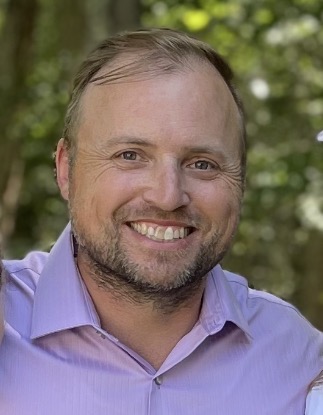
Mike Laskowski
Mike Laskowski is a Business Value Growth Strategist who helps business owners uncover the truths that drive their performance, risk, and readiness. Blending forensic interviewing from a 26‑year federal career with Strategic Capacity analysis and CEPA methodology, he works upstream to reduce owner dependency, increase transferability, and strengthen enterprise value. Mike guides founders through clarity, operational evolution, and transition readiness so their companies become transferable, owner‑independent assets that endure beyond the founder.
Disclaimer
This article is for educational and informational purposes only and does not provide legal, tax, investment, or business brokerage advice. 41 Legacy does not offer M&A brokerage services, legal document drafting, tax preparation, or investment advisory services. Business owners should consult licensed professionals in those disciplines before making decisions related to business transactions, legal matters, tax strategy, or financial planning. All examples are illustrative and may not apply to your specific situation.