
Building a Management Team to Sell Your Business: The Architecture of Transferability
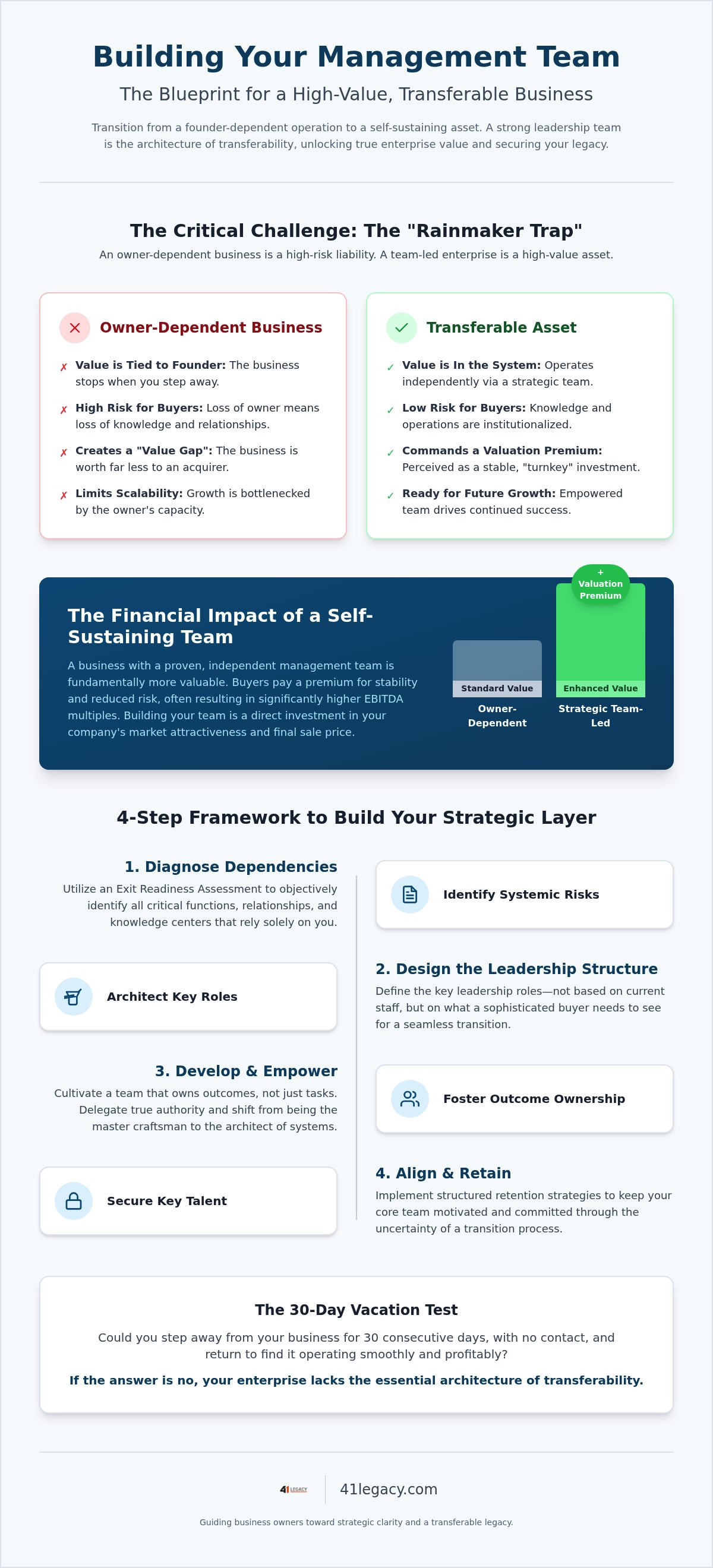
What if the tireless dedication that forged your company's history has become the very weight preventing its future flight? For many visionary stewards, the realization that the enterprise cannot breathe without their direct pulse is a profound burden. We call this the "Rainmaker Trap," a state where the business stops the moment the founder steps away. It's an exhausting cycle that often leaves owners fearing their life's work might be worthless to a successor. Building a management team to sell your business is the essential architecture of transferability; it's the process of turning a personal masterpiece into a self-sustaining, high-value asset.
You've spent years perfecting your craft, and now it's time to ensure that excellence is preserved through a sophisticated leadership structure. We'll guide you through the transition from founder-dependency to a model of strategic clarity and operational independence. This article provides a clear roadmap to exit readiness, demonstrating how enterprise diagnostics and structured advisory can help you cultivate a team that operates like a well-oiled machine. By the end, you'll understand how to increase market attractiveness and secure a legacy that thrives long after your final day at the helm.
Key Takeaways
- Understand why a turnkey management layer is the primary driver of enterprise value and strategic transferability.
- Identify the risks of the "Rainmaker Trap" and learn how reducing owner dependency protects the long-term integrity of your legacy.
- Master a framework for building a management team to sell your business by aligning key leadership roles with the drivers that matter most to sophisticated buyers.
- Discover how to use structured retention strategies to keep your core team motivated and committed throughout the transition process.
- Learn how a comprehensive Exit Readiness Assessment provides the diagnostic roadmap for transforming your business into a self-sustaining asset.
The Architecture of Transferability: Why a Management Team is Your Most Valuable Asset
Transferability isn't a nebulous concept; it's the measured ability of an organization to flourish without the founder's hand on the tiller. When you begin building a management team to sell your business, you're creating the structural integrity required for a successful transition. Buyers prioritize businesses with a "turnkey" management layer because it mitigates the single greatest risk in a transaction: the sudden loss of institutional knowledge. A business that relies on a single individual is a fragile entity, but one supported by a robust leadership team is a resilient asset.
It's vital to distinguish between a "working" team and a "strategic" management team. A working team executes tasks and relies on the owner for direction, while a strategic team owns the outcomes and drives growth. This distinction serves as the bridge between current operations and future enterprise value. Buyers don't just pay for historical cash flow; they pay for the confidence that those flows will persist under new stewardship. A sophisticated management layer provides that certainty, transforming the business from a personal job into a transferable enterprise.
The Philosophical Shift from Owner to Steward
To achieve true exit readiness, an owner must evolve from a master craftsman into an architect of systems. This shift is a form of Transferability Engineering, where the focus moves from individual performance to the preservation of the company's essence. A sophisticated leadership team acts as the guardian of this essence, ensuring that the culture and precision you've cultivated remain intact after the keys are handed over. You aren't merely delegating tasks; you're cultivating stewards who will protect the heritage of the organization well into the future.
The Financial Impact of a Self-Sustaining Team
The presence of an independent leadership team has a measurable effect on valuation. Market data from 2026 indicates that companies with higher enterprise values often command significantly higher EBITDA multiples, a premium driven largely by the perceived stability of the management layer. By building a management team to sell your business, you're effectively reducing the "Risk Premium" that buyers apply to owner-dependent firms. This makes your business a more attractive and defensible asset in a competitive market. Enterprise value is the sum of a company’s tangible and intangible assets, including leadership.
Integrating team development into your Value Growth Roadmap ensures that every hire and promotion serves the ultimate goal of transferability. This disciplined approach to leadership not only eases the eventual transition but also creates a more efficient, profitable operation in the present day.
Escaping the Rainmaker Trap: Reducing Owner Dependency to Protect Enterprise Value
The allure of being the "Rainmaker" is often the founder's ultimate undoing. It feels like mastery; it feels like the business cannot survive without your unique touch. In reality, this dependency is a tether that anchors the company's value to your physical presence. If you're the primary driver of sales and the final word on every operational decision, you hasn't built a transferable asset. You've built a pedestal. This dynamic creates a significant "Value Gap," where the business is worth far less to a buyer than it is to you. Building a management team to sell your business is the only way to dismantle this trap and ensure the enterprise's longevity.
The Diagnostic: Is Your Business a Transferable Asset?
We often ask owners to consider the "Vacation Test." Could you step away from the office for thirty days without the gears grinding to a halt? If the enterprise requires your constant input to function, it lacks the essential architecture of transferability. Bottlenecks in decision-making often hide behind the guise of "quality control." However, true excellence is repeatable and independent of any single individual. Utilizing Enterprise Diagnostics is the first step in identifying these systemic risks. It provides a clear, objective view of where your presence is a requirement rather than an asset, allowing you to begin the work of detachment.
De-risking the Enterprise Through Decentralization
Decentralization is the process of distributing your expertise into the hands of a capable leadership layer. This requires the meticulous creation of SOPs that serve as the blueprint for your legacy. By documenting the precision of your processes, you empower middle management to own key performance indicators (KPIs) with confidence. This shift is vital for a successful exit. A buyer views a "heroic owner" as a liability; they aren't looking for a magician who can't be replaced. They're looking for a well-engineered machine that performs regardless of who holds the keys. When you focus on building a management team to sell your business, you're removing yourself as the bottleneck and allowing enterprise value to flourish. Exploring your current Strategic Capacity Evaluation can reveal if your team is truly ready to carry the torch.
Designing the Strategic Layer: A Step-by-Step Framework for Team Construction
Constructing a leadership layer is not merely a hiring exercise; it's a deliberate act of engineering that ensures the business survives its creator. When building a management team to sell your business, you must first identify the "Value Drivers" a buyer will scrutinize. This foundation allows you to map existing talent to strategic roles or bridge the "Strategic Capacity" gap through targeted recruitment. By codifying a "Quarterback" role to coordinate your professional advisors and implementing a structured Value Growth Roadmap, you create a cadence of progress that external parties will find compelling. This framework transforms the organization from a founder-centric model into a sophisticated, multi-layered enterprise.
Defining Key Leadership Roles for an Exit
A transferable enterprise requires leaders who own specific domains of value. The Operational Leader ensures the "engine" runs with mechanical precision in your absence, maintaining the harmony of daily production. Simultaneously, the Financial Guardian prepares the enterprise value for the rigorous scrutiny of professional due diligence. Finally, the Sales and Marketing Lead proves the brand’s momentum is driven by a repeatable system rather than the owner’s personal charisma. Together, these roles form a strategic shield that protects the company’s health during a transition, signaling to buyers that the business is a stable, self-sustaining asset.
Developing Internal Talent vs. External Hiring
Assessing the "Strategic Capacity" of your current staff is a critical diagnostic step. You must determine if your existing team possesses the depth to evolve into these strategic roles or if outside expertise is required to reach the necessary standard of excellence. The timeline for grooming a successor or a full management layer typically spans two to five years. This duration allows the team to mature and demonstrate a consistent track record of performance. Buyers look for stability; a team that has successfully managed the business for several years provides the highest level of assurance. This investment in human capital is the ultimate expression of stewardship, ensuring the essence of the business is preserved for the next generation of ownership.
Aligning Interests: Retention Strategies that Secure the Future of the Enterprise
A sophisticated leadership team is only as valuable as its commitment to the future. During the delicate transition period following a sale, the departure of a key manager can destabilize operations and erode trust with new ownership. Buyers recognize this risk and often discount their offers if they perceive a lack of alignment. Building a management team to sell your business requires more than just assigning titles; it demands a strategic architecture of incentives that binds the team’s success to the long-term health of the organization. This alignment ensures that the stewards you've cultivated remain dedicated to the enterprise's mission long after your involvement ceases.
Incentive Structures that Build Value
Retention plans generally fall into two categories: equity-based and cash-based structures. While true equity offers direct ownership, many owners prefer "phantom stock" or "Stay Bonuses" to provide the benefits of growth without complicating the cap table. These tools are essential for how to increase enterprise value because they reward the management layer for the same outcomes a buyer seeks. Under Internal Revenue Code Section 409A, these deferred compensation plans must be meticulously structured to avoid severe tax penalties for the recipients, including an additional 20% federal penalty tax. By linking bonuses to the expansion of tangible and intangible assets, you create a culture of ownership that appeals to the most discerning acquirers. This professional-grade approach signals that the business is a mature, self-governing entity.
Navigating the Cultural Transition
Communicating an exit plan requires a balance of transparency and tactical restraint. Owners must frame the transition not as an abandonment, but as the ultimate validation of the team’s excellence. This preserves the legacy and essence of the business, ensuring that the work of a lifetime isn't undone by sudden instability. Establishing a formal governance structure early provides the stability needed to weather a change in leadership. A team’s deep alignment with core company values reduces post-sale friction and ensures operational continuity. When leaders feel like partners in the journey, they're more likely to defend the company’s heritage during the inevitable shifts of new ownership. To begin engineering this alignment within your own leadership group, consider a Strategic Capacity Evaluation to identify your most critical retention needs.
The 41 Legacy Roadmap: Integrating Leadership into Your Exit Readiness Assessment
The journey toward a successful transition is rarely a solitary endeavor. It requires an orchestrated effort between your existing professional circle and a strategic guide who understands the nuances of transferability. At 41 Legacy, we serve as the "Quarterback" for your advisory team, ensuring that the technical precision of your CPAs and Attorneys is harmonized with the long-term vision of your enterprise. This coordinated approach is vital when building a management team to sell your business, as it aligns the legal and financial structures with the human capital required to sustain them. We ensure that every strategic move is intentional, polished, and directed toward increasing the health of the enterprise.
True Exit Planning is a marathon of preparation, not a frantic sprint toward a transaction. It's an unhurried process of refinement where every leadership hire and every documented system adds a layer of resilience to the organization. By integrating team development into a structured Value Growth Roadmap, we help you transition from the daily pressures of operations to the elevated role of a steward. This ensures that the business you've built remains a vibrant, living entity long after the transition is complete. It's a commitment to excellence that preserves the essence of your life's work.
The Role of the Certified Exit Planning Advisor (CEPA)
A CEPA acts as the architect of your business legacy, looking beyond simple balance sheets to evaluate the underlying strength of your leadership layer. We assess whether your team possesses the strategic capacity to navigate a change in ownership without losing the company's core essence. This advisory process aligns your personal and financial goals with the business's operational needs, moving you away from purely transactional thinking. It's about building a legacy that commands respect and holds its value through the progression of time. We believe that a business should be a masterpiece of engineering, capable of thriving independently of its creator.
Next Steps: Securing Your Business Legacy
The first step in this deliberate process is identifying the gaps in your current leadership structure. Through a comprehensive Exit Readiness Assessment, we provide the enterprise diagnostics needed to understand your team’s current state of readiness. From there, we offer monthly implementation support to ensure that your roadmap is followed with the same meticulous care you've always applied to your craft. This steady progress is what transforms a founder-dependent company into a masterpiece of transferability. We invite you to slow down and appreciate the details of your organization's future potential.
Schedule your initial diagnostic with 41 Legacy to evaluate your team’s readiness and begin the work of securing your enterprise's future. Together, we can ensure that your impact endures for generations to come.
The Architecture of an Enduring Legacy
Your business is more than a series of transactions; it's a meticulously crafted entity with a story that deserves to endure. By focusing on building a management team to sell your business, you transform your role from a daily requirement into a strategic architect. You've discovered that reducing owner dependency isn't simply about delegation. It's about engineering a self-sustaining asset that commands a premium in the market while protecting the heritage you've built. Aligning your leadership's interests through structured retention ensures the essence of your organization remains intact throughout the transition.
At 41 Legacy, we provide the strategic clarity needed to navigate this complex evolution. Led by Certified Exit Planning Advisor (CEPA) expertise, our proven Value Growth Roadmap methodology serves as the blueprint for your success. We act as the strategic "Quarterback," coordinating your professional advisors to ensure every detail of your transferability is polished to a high sheen. Your legacy is a masterpiece in progress, and its most important chapter is the one that ensures it flourishes independently. Begin your journey toward a transferable legacy with an Exit Readiness Assessment.
The future of your enterprise is waiting for the structure you provide today.
Frequently Asked Questions
How long does it take to build a management team before selling?
Building a management team to sell your business typically requires a window of two to five years. This duration allows the leadership layer to demonstrate a consistent track record of operational excellence without your direct intervention. Buyers look for a history of stability and independent decision-making. Rushing this process often leaves gaps in the architecture of the business, which can lead to a lower valuation during the due diligence phase.
Can I sell my business if I am still the primary salesperson?
You can sell the business, but its market attractiveness will be severely compromised. When the owner is the primary salesperson, a buyer perceives a high risk that revenue will vanish upon your departure. This dependency creates a Value Gap that often prevents a successful exit. Transitioning these relationships to a dedicated sales leader is a core component of transferability engineering, ensuring the brand’s momentum survives the transition.
What is the "Rainmaker Trap" in business exit planning?
The Rainmaker Trap occurs when the enterprise's success is tethered to the owner's individual performance and charisma. If you're the primary decision-maker or salesperson, the business lacks the structural integrity to thrive independently. In exit planning, this trap signals to acquirers that the company's past success may not be repeatable. Breaking this cycle requires a shift from being a master craftsman to becoming an architect of systems and leadership.
Do I need to give my management team equity to sell the business?
Direct equity is one option, but it isn't the only path to alignment. Many owners utilize phantom stock or stay bonuses to create a culture of ownership without diluting the cap table. These structures reward the team for the growth of enterprise value while ensuring compliance with Section 409A regulations. The goal is to bind the team’s financial success to a successful transition, providing the stability that sophisticated buyers demand.
How does a management team impact the valuation of my company?
A sophisticated management team directly impacts the EBITDA multiples a buyer is willing to pay. By reducing the "Risk Premium" associated with owner-dependent firms, a turnkey leadership layer makes the company more defensible and scalable. Market data indicates that companies with independent management command higher multiples because the buyer is acquiring a self-sustaining machine rather than a personal job. This is the essence of building a transferable asset.
Should I tell my employees I am planning to sell the business?
Communication must be handled with surgical precision to avoid destabilizing the enterprise. While key leadership should be informed early to align their interests, a general announcement is usually reserved for the final stages of a transaction. Sharing too much too soon can spark unnecessary panic or talent attrition. We recommend a structured approach that emphasizes the preservation of the company's legacy and the continued growth of the team’s opportunities.
What is the role of a "Quarterback" in the exit planning process?
The Quarterback serves as the central point of coordination for your entire advisory team, including CPAs, attorneys, and RIAs. At 41 Legacy, we ensure that every professional's work is aligned with your overarching goal of exit readiness. This prevents fragmented advice and ensures that the strategic roadmap is followed with precision. By managing these complex relationships, we allow you to focus on the high-level stewardship of your business.
What happens if my management team leaves after I sell the business?
If key leaders depart shortly after a transaction, it can trigger clawback provisions or jeopardize earn-out agreements. This is why retention strategies are a critical pillar of our Strategic Advisory services. Buyers often require key managers to sign employment agreements as a condition of the sale. Implementing long-term incentive plans well before the exit ensures the team is motivated to protect the company's health through the transition period and beyond.

Article by
Mike Laskowski
Mike Laskowski is a Business Value Growth Strategist who helps business owners uncover the truths that drive their performance, risk, and readiness. Blending forensic interviewing from a 26‑year federal career with Strategic Capacity analysis and CEPA methodology, he works upstream to reduce owner dependency, increase transferability, and strengthen enterprise value. Mike guides founders through clarity, operational evolution, and transition readiness so their companies become transferable, owner‑independent assets that endure beyond the founder.
Disclaimer
This article is for educational and informational purposes only and does not provide legal, tax, investment, or business brokerage advice. 41 Legacy does not offer M&A brokerage services, legal document drafting, tax preparation, or investment advisory services. Business owners should consult licensed professionals in those disciplines before making decisions related to business transactions, legal matters, tax strategy, or financial planning. All examples are illustrative and may not apply to your specific situation.